
Top 12 Best Reciprocating Saw Blade for Cast Iron Revealed!
Tackling cast iron with a reciprocating saw requires the right blade, or it quickly becomes a frustrating ordeal. A dull or improper blade leads to slow cuts, excessive wear, and sometimes even damaged saw motors. The best reciprocating saw blade for cast iron cuts through thick, tough surfaces without bogging down or breaking apart.
The key factors to look for include blade material, teeth design, and length. Carbide-tipped blades stand up to the hardness of cast iron far better than standard steel, lasting longer and maintaining sharpness. Teeth count usually ranges from 6 to 10 per inch; fewer teeth mean faster cuts but rougher edges, while more teeth create smoother finishes but can clog quickly.
Blade length around 6 to 9 inches offers good control and reach on most cast iron pipes or fixtures.
Need a Quick Check?
| Image | Product | Price |
|---|---|---|
Our Top Picks 1  | Generic Diamond Grit 9 Inch | Check Price |
Our Top Picks 2  | Diablo Diamond Grit 9 Inch | Check Price |
Our Top Picks 3  | EZARC Carbide 9 Inch | Check Price |
Our Selected Top 12 Reciprocating Saw Blade for Cast Iron Worth Your Money
This list features carefully chosen reciprocating saw blades designed specifically for cutting cast iron. Each review explains how well the blade performs, highlights its advantages and drawbacks, and identifies the types of users or projects it is best suited for.
1. Diamond Grit Reciprocating Saw Blade 9 Inch 3-Pack
Cutting through cast iron becomes much easier with industrial-grade diamond grit on these 9-inch reciprocating saw blades. Perfect for contractors and serious DIYers, their standout feature is durability, lasting up to eight times longer than standard blades while tackling tough materials.
Setting up these blades is straightforward, fitting standard Sawzall tools without fuss. Day-to-day, the diamond grit reduces binding, so cutting feels smoother and quicker. They handle cast iron pipe, brick, fiber cement, and fiberglass without frequent blade changes, which you’ll appreciate during long projects.
The package includes three blades, making it convenient to keep spares handy.
These blades handle heavy-duty jobs with ease, slicing through dense materials thanks to the diamond-coated edge. Their sturdy build is aimed squarely at tough tasks, reducing downtime with a longer lifespan.
The main compliment centers on how quickly and cleanly they cut, while the most common gripe is about the initial price investment compared to regular blades.
These blades get praised for cutting through tough materials quickly and smoothly, reducing time spent swapping blades. Common complaints mention the price being higher than regular reciprocating saw blades, which can feel steep before factoring in durability. Everyday use benefits from the diamond coating, but the initial cost stands out.
Ideal for users who regularly work with cast iron and dense materials and want fewer blade changes. Less suitable for casual or occasional use where cost is a concern and extreme durability isn’t necessary.
Pros
- Industrial-grade diamond grit for tough materials
- Longer lifespan, up to eight times standard blades
- Reduces binding and material waste
- Pack includes three blades for convenience
Cons
- Higher upfront cost than standard blades
- Only compatible with standard Sawzall tools
| Specification | Details |
|---|---|
| Brand Name | jinmg |
| Model | JM0930DG03 |
| Unit Count | 3 Count |
| Set Name | 3-Pack 9-Inch Diamond-Grit Reciprocating Saw Blades |
| Included Components | Box |
| Manufacturer | jinmg |
2. Diablo Diamond Grit Reciprocating Saw Blade 9 Inch
Ideal for anyone regularly cutting dense materials like cast iron, this 9-inch blade stands out for its durability. It’s perfect when you need a blade that stays sharp through tough jobs and keeps cutting accurately over time.
Setting it up is straightforward, and it fits most standard reciprocating saws without fuss. The diamond grit edge helps tackle hard materials without wearing down quickly, so you don’t have to swap blades often.
The thin kerf design makes your cuts faster and cleaner, while the Perma-Shield coating keeps it running smoothly by resisting heat and corrosion.
It cuts through cast iron and similar materials with solid precision, thanks to a reinforced blade backing that limits flex and vibration. The blade lasts much longer than typical saw blades, making it a reliable choice for demanding projects.
Some note that the price is higher compared to typical blades, but the extended blade life tends to balance that out.
Users appreciate the blade’s extended life and ability to maintain cutting accuracy on tough materials like cast iron. The most frequent downside mentioned is the price, but its durability tends to justify the investment for heavy-duty work.
Those who need a blade for frequent, intense cuts on dense materials will find it effective and long-lasting. For casual or infrequent use, a less expensive blade might be a more practical choice.
Pros
- Diamond grit edge lasts up to 6X longer than standard blades
- Thin kerf design for faster, cleaner cuts
- Perma-Shield coating resists heat and corrosion
- Reinforced backing minimizes blade deflection
Cons
- Higher cost compared to standard saw blades
- Single blade sold per pack limits stock on hand
| Specification | Details |
|---|---|
| Brand Name | Diablo |
| Model | DS0930DGX |
| Unit Count | 1 Count |
| Number of Items | 1 |
| Included Components | Diamond Grit Reciprocating Blade, 9-Inch |
3. EZARC Carbide Reciprocating Saw Blade 9 Inch
Carbide teeth make this 9-inch blade stand out for tackling cast iron and tough metals without wearing out fast. It suits demolition jobs where cutting stainless steel, rebar, or hardened steel is a daily task. Longevity and durability over bi-metal blades are the biggest strengths.
Setting up the blade is straightforward on any standard reciprocating saw. The 8 teeth per inch design balances cutting speed and smoothness, making it manageable for cutting through thick metals. The carbide tips hold up well during repeated use, meaning fewer blade changes and less downtime on heavy projects.
Cutting through advanced steels and hardened metals works smoothly, with fewer snags or tooth damage than typical metals blades. Precision-ground carbide teeth individually welded provide necessary flexibility and strength for demanding work.
Strong praise highlights its cutting performance and lasting life, while some mention it can be more costly than bi-metal options.
Longevity during metal cutting stands out, with carbide teeth holding up much longer than typical bi-metal blades. Most users appreciate how well it slices through tough materials like stainless steel and hardened steel, though the price is a drawback for some.
Those needing a blade for frequent heavy metal cutting and demolition will find it valuable for lasting performance. Occasional users or those with budget constraints might prefer more affordable blades that wear out faster but cost less upfront.
Pros
- Long-lasting carbide teeth
- Designed for heavy metal cutting
- Good flexibility and impact strength
- Ideal for stainless and hardened steels
Cons
- Higher price than bi-metal blades
- May not fit all reciprocating saw brands
| Specification | Details |
|---|---|
| Blade Length | 9 inch |
| Teeth Per Inch (TPI) | 8 TPI |
| Material | Carbide |
| Model | 8021C07 |
| Cutting Capacity | 1/8 in. – 1/2 in. metal |
4. Carbide Reciprocating Saw Blades 6 Inch 3-Pack

GRENPRO Carbide Reciprocating Saw Blades 3-Pack tackles tough metals with ease, making it ideal for demolition and heavy-duty cutting tasks. Its standout feature is the long-lasting carbide teeth, which keep the blade sharp far longer than regular bi-metal options.
Setting the blades up on a reciprocating saw is straightforward, fitting securely without hassle. The 6-inch length and 8 teeth per inch (TPI) design manage dense metals efficiently, offering controlled, fast cuts. Carbide tips stay sharp through thick materials, so swapping blades happens less often during demanding projects.
Handling metals like stainless steel or rebar is where these blades truly shine. They cut fast and smooth, thanks to aggressive teeth and carbide strength resisting wear. The build feels solid and durable.
A common downside noticed is that the blades can be pricier than standard options, but the tradeoff is fewer blade changes.
Many users highlight how much longer the carbide teeth stay sharp under heavy metal cutting, dramatically cutting downtime. Some mention the blades being more expensive than typical alternatives, which might not suit light, occasional users.
Those frequently cutting dense metals will appreciate the durability and cutting speed of these blades. Casual users or those working mostly with softer materials might look for cheaper blades that suit less demanding tasks.
Pros
- Long-lasting carbide teeth reduce blade changes
- Effective on stainless steel and hardened metals
- Fast, smooth cuts with controlled performance
- Three blades included per pack
Cons
- Higher cost compared to standard bi-metal blades
- Limited to 6-inch blade length
| Specification | Details |
|---|---|
| Brand Name | GRENPRO |
| Model | 073015 |
| Unit Count | 3 Count |
| Set Name | GRENPRO Carbide Reciprocating Saw Blades 3-Pack (6-inch, 8TPI) |
| Included Components | 3Pcs Reciprocating Saw Blade Set |
5. EZARC Bi-Metal Reciprocating Saw Blade 8 Inch 5-Pack

Cuts through cast iron with surprising ease, making tough jobs feel manageable. Designed for anyone tackling metal tubing or cast iron regularly, it stands out for lasting sharpness and speed, reducing frustration during heavy-duty tasks.
Attaching the blade is straightforward thanks to its 6° angled shank, which locks firmly and naturally pushes the blade down as you work. The arc edge design means it bites deeper into metal, cutting faster while reducing the wear on each tooth.
You’ll notice less resistance, letting you keep a steady hand during cuts.
Durability is where it really shines, with teeth made from M42 high-speed steel containing 8% cobalt. This keeps the blade sharp even when cutting through tough metal over and over.
Reviews often mention how it stays sharp and cuts quickly, though a few note it can wear down faster under extremely heavy use.
The blade’s combination of arc edge and cobalt steel means it cuts fast and keeps its edge longer than standard blades. Most feedback praises its speed and durability, though some notice quicker wear when used on very thick or hard cast iron material.
Great for those who regularly cut metal and want blades that last, especially in moderate to heavy-duty jobs. Professionals with extremely heavy cutting needs might want to consider more specialized or industrial-grade blades.
Pros
- Arc edge design for faster cutting
- 6° angled shank for secure fit
- M42 steel with cobalt for durability
- 5 blades per pack
Cons
- Can wear down faster under very heavy use
- May struggle with extremely thick cast iron
| Specification | Details |
|---|---|
| Brand Name | EZARC |
| Model | 802302 |
| Number of Items | 5 |
| Blade Length | 8 Inch |
| Teeth Per Inch (TPI) | 14 |
| Material | Bi-Metal with 8% Cobalt |
6. Diamond Grit Reciprocating Saw Blade 9 Inch 3-Pack

Great for tackling tough materials like cast iron, these diamond grit blades offer a long-lasting edge and sturdy design. Perfect for anyone needing reliable, heavy-duty cutting power with a bit more reach and durability than typical blades.
Setting up involves simply fitting the 9-inch blade into any reciprocating saw with a 1/2 inch shank, making it compatible with most brands. The thin kerf design speeds through thick materials while keeping the cut precise and clean.
It works well in tight spaces thanks to its extended length and reinforced body that stands up to heavy-duty projects.
The blade handles cast iron and other dense materials with ease, holding up much longer than standard blades thanks to its diamond grit edge. The construction feels tough, built to last through demanding tasks.
Some users mention the price being a bit higher than average but appreciate the durability more than the cost. Efficiency and durability are its strong points.
The diamond grit edge provides significant durability, lasting much longer than normal blades on cast iron and masonry. Common feedback points to the blades standing up well to heavy use, although some find the cost relatively steep for the quantity received. The balance between longevity and initial price tends to be the main consideration.
Handy for anyone working regularly with cast iron or similar materials requiring a tough, precise cut. Those needing more blades per pack or on a strict budget might look for alternatives. The blade’s universal fit and length appeal to DIY renovators and professionals alike, especially when cutting in tight or confined spots.
Pros
- Delivers up to 6X longer life than standard blades
- Thin kerf improves cut speed and accuracy
- Fits all brands with 1/2 inch shank
- Reinforced body handles tough materials well
Cons
- Price higher compared to some standard blades
- Limited pack size with only 2 blades included
| Specification | Details |
|---|---|
| Brand Name | HAPU HARPOW TOOLS |
| Model | HAPUR9D |
| Blade Length | 9 Inch |
| Unit Count | 2 Count |
| Shank Size | 1/2 inch |
| Grit Type | 40-50 Grit Diamond-Grit Edge |
7. Diablo Steel Demon Carbide Reciprocating Saw Blades 9 Inch 3-Pack

Carbide-tipped blades designed for extreme metal cutting make these ideal for tackling cast iron and other tough materials. Perfect for someone needing a reliable blade that stays sharp over time, their strongest point is the ultra-hardened cutting edge that lasts much longer than standard blades.
Setting these blades up is straightforward since they fit standard reciprocating saws without adjustments. The oversized blade body helps keep cuts straighter by reducing vibration.
Thanks to the Perma-SHIELD coating, they resist heat and corrosion, so they don’t gum up during use, which means less cleaning and more cutting time on hard metals like cast iron.
Cutting power with these blades is impressive, handling high-strength metals cleanly and with accuracy. The TiCo Hi-Density carbide tip delivers durability that can go up to 50 times longer than regular bi-metal blades. Most users find that the blades maintain their edge well, while the main downside mentioned is the premium cost compared to standard blades.
The blade’s durability impresses with many users noting significantly longer cutting life on cast iron compared to regular blades. The most common drawback is its cost, which is noticeably above standard options but reflects the carbide tip and coating technology. Handling and setup are simple yet specialized for metal tasks.
Anyone frequently cutting cast iron and other hard metals will appreciate the longevity and clean cuts offered here. Those with budget constraints or occasional light use might prefer less expensive bi-metal blades that suffice for softer materials and shorter jobs.
Pros
- Up to 50X longer cutting life on tough metals
- Perma-SHIELD coating resists heat and corrosion
- Oversized blade body for straighter, cleaner cuts
- Enhanced impact resistance on carbide tips
Cons
- Higher price than standard bi-metal blades
- Only compatible with 9-inch reciprocating saws
| Specification | Details |
|---|---|
| Brand Name | Diablo |
| Model | DS0908CF3 |
| Unit Count | 1 Count |
| Number of Packs | 3 |
| Number of Items | 3 |
| Set Name | 3-Pack |
8. Carbide Reciprocating Saw Blades 6 Inch 3-Pack

Carbide Reciprocating Saw Blades 6 Inch 3-Pack suits those working with tough metals like cast iron, standing out for its fast cutting speed and long-lasting carbide tips. Ideal for anyone needing reliable, heavy-duty blades compatible with all major reciprocating saw brands.
Setup is straightforward, fitting easily on any reciprocating saw thanks to its universal compatibility. Daily use feels efficient because the 8 TPI (teeth per inch) design balances smooth cutting with durability. Its carbide tipped teeth keep the blade sharp longer, meaning less frequent changes during projects involving cast iron or other metals.
Performance on metal is impressive; it slices through cast iron quickly with minimal effort. The build uses unique carbide material, vastly extending blade life, up to 50 times longer than bi-metal alternatives.
Most praise highlights how much faster this blade cuts, while some mention the initial cost feels higher compared to basic blades.
Fast cutting speed and extended blade life impress users working with hard metals, while the cost point is the main drawback for some. Taking on tough jobs like cutting cast iron becomes much easier with this blade’s durability and efficiency.
People frequently handling thick metal projects will appreciate its longevity and speed. Those needing different blade lengths or working primarily on softer materials might want to explore other options that suit lighter use or offer more size variety.
Pros
- Compatible with all reciprocating saw brands
- Carbide tips extend blade life significantly
- Faster cutting speed than bi-metal blades
- 3-pack gives good value and backup
Cons
- Higher initial price than standard blades
- Only comes in 6-inch length
| Specification | Details |
|---|---|
| Brand Name | BATHTOI |
| Model | CR0608BW03 |
| Unit Count | 3 Count |
| Blade Length | 6 Inch |
| Teeth Per Inch (TPI) | 8 TPI |
| Material | Carbide Tipped Teeth |
9. Diablo Steel Demon Carbide Reciprocating Saw Blade 6 Inch

Carbide-tipped blades like this one stand out when cutting cast iron, offering seriously long wear. Perfect for anyone tackling tough metals, it handles high strength alloys and stainless steel with ease.
The single biggest strength lies in its durable TiCo Hi-Density carbide edge that lasts far beyond typical blades.
Attaching the blade to your reciprocating saw is straightforward, and the 6-inch length fits most standard saws. The Perma-SHIELD coating keeps heat down so the blade keeps moving smoothly without sticking or corroding. A wider 1 blade body keeps vibrations low, making your cuts cleaner and straighter even during extended use.
It cuts through cast iron efficiently and leaves behind neat edges thanks to reduced chatter. The carbide tips hold up much longer than standard metal blades, meaning fewer blade changes during a job. One downside mentioned is the cost, which can be higher than typical blades.
Another point is its specialized nature, overkill for softer materials.
The blade’s standout feature is its ultra-hardened cutting edge that lasts significantly longer on tough metals like cast iron. Many users note the clean, precise cuts it delivers with minimal vibration. The primary drawback is its cost, which may be a barrier for casual projects or occasional use.
This blade suits professionals or serious DIYers who frequently cut metal and need durable performance. Anyone working mainly with softer materials or looking for a budget option should consider alternatives better tailored to those needs.
Pros
- Carbide tip delivers 100X longer cutting life
- Perma-SHIELD coating resists heat and corrosion
- 1″ blade body stabilizes for cleaner cuts
- Handles cast iron and metal alloys easily
Cons
- Higher price than standard reciprocating saw blades
- Not ideal for softer or non-metal materials
| Specification | Details |
|---|---|
| Brand Name | Diablo |
| Model | DS0608CFA |
| Blade Length | 6 Inch |
| Unit Count | 1 Count |
| Set Name | AMPED™ Steel Demon™ |
10. Diablo Steel Demon Carbide Reciprocating Saw Blades 9 Inch 3-Pack

Cutting through cast iron pipes and heavy metal can be tough without the right blade. Perfect for tradespeople and DIYers tackling thick, durable materials, the Diablo Steel Demon Carbide Reciprocating Saw Blades excel at delivering sharp, long-lasting cuts that won’t dull quickly.
Setting them up is straightforward, fitting most standard reciprocating saws without a fuss. These 9-inch blades from a trusted brand come in a convenient 3-pack, so you have spares ready when the job demands.
Daily cutting through cast iron feels steady thanks to their solid carbide teeth designed to resist wear and tear over time.
The blades cut through tough metals reliably with minimal effort and hold their edge well, making heavy work more manageable. Their build quality is durable, but some mention the occasional blade snapping if pressure is uneven.
The most praised feature is how long-lasting the teeth are, while the common gripe is the price being a bit higher than some other brands.
Diablo Steel Demon Carbide Reciprocating Saw Blades handle cast iron cutting with durability and precision. These blades maintain sharpness over multiple cuts, preventing frequent replacements. Some find the 9-inch length less maneuverable in tight, awkward spaces, which can make detailed work cumbersome. Cutting speed slows down if the blade isn’t pushed steadily through dense materials.
Metalworkers and contractors cutting medium to thick cast iron pipes or panels will appreciate these blades for their toughness. Those working primarily in confined spaces or engaging in delicate, intricate cuts might prefer shorter or finer-toothed blades that allow better control and faster, more accurate results.
Pros
- Long-lasting carbide teeth resist dulling
- Fits standard reciprocating saws easily
- Pack of three ensures spares for extended use
- Strong build handles thick cast iron cutting
Cons
- Can snap with excessive uneven pressure
- Higher price than some alternative blades
| Specification | Details |
|---|---|
| Brand Name | Brock |
| Model | DS0908CFA3 |
| Unit Count | 1 Count |
| Number of Packs | 3 |
| Number of Items | 3 |
| Set Name | Diablo Steel Demon Amped 3-Pack Reciprocating Saw Blades |
11. BOSCH Diamond Grit Reciprocating Saw Blade 9 Inch

Offering up to three times faster cutting and a lifespan three times longer than carbide grit blades, the Bosch Diamond Grit Reciprocating Saw Blade is made for tackling tough materials like cast iron. It’s best suited for anyone needing a blade that handles abrasive surfaces without wearing out quickly.
Attaching the 9-inch blade to your reciprocating saw feels secure and straightforward. The vacuum-brazed diamond grit edge stays sharp through repeated use on materials like cinder block and pipe.
Its abrasive cutting edge keeps performance consistent, cutting through dense metals with less effort. You’ll notice it holds up longer compared to typical grit blades, reducing the frequency of replacements during projects.
Its diamond grit edge powers through cast iron and similar materials efficiently, making it a reliable choice for heavy-duty work. Built to endure demanding conditions, the blade balances durability with sharpness. The strongest feedback praises its speed and longevity, while some mention a lack of warranty and potential rust issues when used in wet environments.
Strong praise highlights its fast cutting speed and extended blade life, making it reliable for repeated heavy-duty use. The most common complaint points to the absence of a warranty and concerns over potential rust from exposure to moisture.
This blade suits anyone frequently cutting cast iron and abrasive materials who values longevity and efficiency. People looking for a blade with warranty coverage or needing rust-resistant options might want to consider alternatives.
Pros
- Diamond grit blade cuts abrasive materials effectively
- Lasts up to 3 times longer than carbide grit blades
- 9-inch length fits common reciprocating saws
- Vacuum brazed edge for heavy use
Cons
- No warranty included with purchase
- May be prone to rust without proper care
| Specification | Details |
|---|---|
| Brand Name | Bosch |
| Model | RCB9DG |
| Unit Count | 1 Count |
| Number of Items | 1 |
| Included Components | (1) 9 In. 50 Grit diamond-grit Edge reciprocating saw blade |
| Item Type Name | 9 In. 50-Grit Edge Reciprocating Saw Blade |
12. Tungsten Carbide Reciprocating Saw Blades 6 Inch 2-Pack
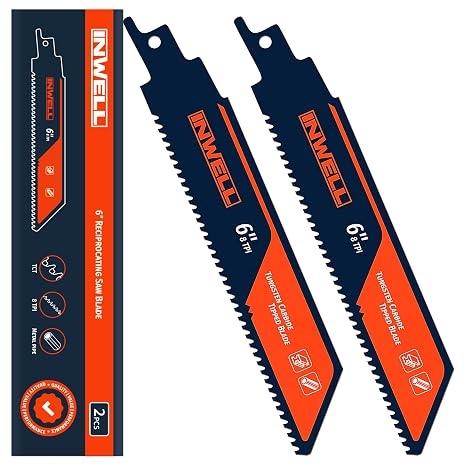
Anyone tackling heavy-duty metal cutting projects will appreciate these saw blades. They shine at breaking through cast iron, stainless steel, and thick rebar. Their standout strength lies in the tungsten carbide teeth, engineered specifically for tough jobs that wear down regular blades fast.
Setup is straightforward since these blades fit most standard reciprocating saws. On a daily basis, the durability shows immediately; they keep their edge and slice through hard metals smoothly without constant replacements.
The 6-inch length and 8 TPI tooth profile offer a good balance between control and aggressive cutting, making it easy to handle demo work or pipe cutting.
Cutting through dense metals feels steady and controlled thanks to the ground carbide teeth that reduce vibration noticeably. Built for longevity, these blades last way longer than typical bi-metal options, standing up to heavy use. The biggest upside is how long they stay sharp.
The main drawback is a bit more stiffness from the carbide teeth, which sometimes makes curved cuts tougher.
The tungsten carbide teeth hold their sharpness through frequent cutting of thick metals, making the blades ideal for long, demanding jobs. Most users find the blades highly durable but sometimes difficult to maneuver on curved or intricate cuts because of their rigidity.
Heavy-duty metalworkers and those cutting cast iron will benefit the most from these blades’ toughness and longevity. People needing blades for detailed, curved cuts or different lengths might want to look elsewhere to meet those specific needs.
Pros
- Ultra-durable tungsten carbide teeth
- Sharp up to 50 times longer than bi-metal blades
- 8 TPI tooth profile for clean, controlled cuts
- Minimal vibration during cutting
Cons
- Less flexible, harder on curved cuts
- Only comes in 6-inch length
| Specification | Details |
|---|---|
| Brand Name | Inwell |
| Model | In-rsb-8tpi-2pc |
| Number of Packs | 2 |
| Set Name | 2-pack 6-inch blades |
| Part Number | Inwell-8tpi-2pc |
Best Reciprocating Saw Blades for Cast Iron Comparison
| Product | Brand | Size | Teeth Per Inch (TPI) | Quantity |
|---|---|---|---|---|
| Generic Diamond Grit 9 Inch | jinmg | 9 Inch | Diamond Grit | 3 Count |
| Diablo Diamond Grit 9 Inch | Diablo | 9 Inch | Diamond Grit | 1 Count |
| EZARC Carbide 9 Inch | EZARC | 9 Inch | Carbide | 1 Count |
| Generic Carbide 6 Inch 3-Pack | GRENPRO | 6 Inch | 8 TPI Carbide | 3 Count |
| EZARC Bi-Metal 8 Inch 5-Pack | EZARC | 8 Inch | 14 TPI Bi-Metal | 5 Count |
| Generic Diamond Grit 9 Inch | HAPU HARPOW TOOLS | 9 Inch | 40-50 Grit Diamond | 2 Count |
| Diablo Steel Demon Carbide 9 | Diablo | 9 Inch | 8 TPI Carbide | 3 Count |
| Generic Carbide 6 Inch 3-Pack | BATHTOI | 6 Inch | 8 TPI Carbide | 3 Count |
| Diablo Steel Demon Carbide 6 | Diablo | 6 Inch | 8 TPI Carbide | 1 Count |
| Diablo Steel Demon Carbide 9 | Brock | 9 Inch | Carbide | 3 Count |
| BOSCH Diamond Grit 9 Inch | Bosch | 9 Inch | 50 Grit Diamond | 1 Count |
| Tungsten Carbide 6 Inch 2-Pack | Inwell | 6 Inch | 8 TPI Tungsten Carbide | 2 Pack |
- Brandjinmg
- Size9 Inch
- Teeth Per Inch (TPI)Diamond Grit
- Quantity3 Count
- BrandDiablo
- Size9 Inch
- Teeth Per Inch (TPI)Diamond Grit
- Quantity1 Count
- BrandEZARC
- Size9 Inch
- Teeth Per Inch (TPI)Carbide
- Quantity1 Count
- BrandGRENPRO
- Size6 Inch
- Teeth Per Inch (TPI)8 TPI Carbide
- Quantity3 Count
- BrandEZARC
- Size8 Inch
- Teeth Per Inch (TPI)14 TPI Bi-Metal
- Quantity5 Count
- BrandHAPU HARPOW TOOLS
- Size9 Inch
- Teeth Per Inch (TPI)40-50 Grit Diamond
- Quantity2 Count
- BrandDiablo
- Size9 Inch
- Teeth Per Inch (TPI)8 TPI Carbide
- Quantity3 Count
- BrandBATHTOI
- Size6 Inch
- Teeth Per Inch (TPI)8 TPI Carbide
- Quantity3 Count
- BrandDiablo
- Size6 Inch
- Teeth Per Inch (TPI)8 TPI Carbide
- Quantity1 Count
- BrandBrock
- Size9 Inch
- Teeth Per Inch (TPI)Carbide
- Quantity3 Count
- BrandBosch
- Size9 Inch
- Teeth Per Inch (TPI)50 Grit Diamond
- Quantity1 Count
- BrandInwell
- Size6 Inch
- Teeth Per Inch (TPI)8 TPI Tungsten Carbide
- Quantity2 Pack
How to Choose the Right Saw Blade for Cast Iron
Choosing the right saw blade for cast iron involves focusing on blade material, tooth design, and durability to ensure clean cuts and longer life. Selecting the appropriate blade reduces wear and breakage, making your work more efficient and preventing costly replacements or delays.
Blade Material and Coating
Cutting through cast iron quickly wears down ordinary blades, causing frequent replacements and frustrating interruptions. Blades made from high-speed steel or bimetal hold up considerably better under the intense abrasion of cast iron. Carbide-tipped blades provide even greater durability, especially when dealing with thicker or denser pieces.
These materials resist chipping and retain sharpness longer, reducing downtime.
Coatings like titanium nitride or carbide layers help reduce friction and heat buildup on the blade’s edge. Less heat means less risk of warping or losing temper in the metal, which would otherwise degrade cutting performance. A blade that resists corrosion stays reliable through dusty or moist work environments.
Picking one with these qualities means fewer blade swaps and more consistent cuts on cast iron.
Tooth Design and Tpi Teeth per Inch
Cutting hard cast iron demands a tooth shape that minimizes chipping and resists dulling. Fine, wavy tooth patterns tend to reduce vibration and allow smoother cutting lines. The tooth count, or TPI, usually ranges around 10 to 14 for cast iron, striking a balance between speed and a clean edge.
Too low a TPI causes rough cuts and faster blade wear; too high slows progress down unnecessarily.
Tooth geometry influences control during the cut. Blades with an efficient rake angle cut through hard metal without snagging, reducing kickback and vibration.
This makes the saw easier to handle and extends blade life. After trying several designs, those mid-range TPI blades with wave-shaped teeth stand out for tough cast iron jobs.
Blade Size and Thickness
Longer blades, around 6 to 9 inches, provide the reach needed for cutting thick or awkward cast iron pieces without stopping. However, length isn’t everything; blade thickness is crucial too. A thicker blade resists bending and breaking under the heavy pressure of cutting cast iron but too thick a blade can slow the cut.
A blade between 0.05 and 0.07 inches thick balances stiffness with cutting speed.
Blade size has to match the saw’s design, too. Not every saw supports longer blades, and some rely on specific thickness ranges for proper tension and fit.
Choosing a blade compatible with your model ensures the blade stays straight while working, preventing breakage and uneven cuts.
Compatibility and Fit
Blades come with different shank designs. Universal shanks fit a wide range of saw brands, making blade swapping easier across tools.
Proprietary shanks can lock blades in tighter but limit options to certain brands. A universal blade simplifies the toolbox, but sometimes a snug fit from a proprietary design reduces wobbling during cuts.
Quick-release blade clamps speed up installation and removal, saving time on the job. A secure fit without play or looseness means the blade tracks true along the cut line and doesn’t chatter.
Loose blades cause rough edges and increase wear, so tight, stable fitting matters just as much as blade quality.
Durability and Heat Resistance
Cutting cast iron generates a lot of heat from friction that quickly dulls ordinary blades. A blade’s ability to dissipate heat reduces edge degradation and warping.
Signs a blade is past its prime include slower cutting speed, rougher finishes, and visible tooth damage. Using a worn blade only strains the saw and risks overheating.
Blades with heat-resistant coatings or carbide tips maintain sharpness much longer during continuous use. Durable construction and materials extend blade life under tough conditions.
Changing blades before heavy wear prevents wasted effort and ensures each cut remains precise from start to finish.
Tips for Efficiently Cutting Cast Iron with a Reciprocating Saw
Using a reciprocating saw to cut cast iron requires attention to blade type and cutting technique. Blades designed specifically for metal, particularly bi-metal blades with high tooth count, work best. Selecting blades with fine, closely spaced teeth helps reduce chipping and overheating on the hard cast iron surface.
Practical tips include:
- Secure the workpiece firmly to avoid vibration, which can damage the blade or cause uneven cuts.
- Start the cut slowly to establish a groove, then increase speed gradually.
- Apply steady, moderate pressure; forcing the blade risks bending or breaking it.
- Periodically pause to let the blade cool, preventing premature wear.
Consistent attention to speed and pressure, combined with using the right blade, will yield cleaner cuts and extend blade life when working on cast iron.
Proper Maintenance and Care for Reciprocating Saw Blades Used on Cast Iron
Maintaining reciprocating saw blades used for cutting cast iron ensures better performance and longer usability. After each session, inspect the blade for signs of wear such as rounded teeth, chips, or cracks.
These indicators mean the blade should be replaced as dull blades struggle on cast iron and can cause overheating.
Maintenance steps include:
- Clean the blade thoroughly with a wire brush or solvent to remove metal debris and prevent rust.
- Store blades in a dry location, preferably in a protective case to avoid damage.
- Avoid using the same blade on various materials without cleaning, as embedded particles can dull the blade faster.
Maintaining blades in good condition reduces cutting resistance, prevents damage to both tool and material, and helps deliver precise results on cast iron.
Comparing Reciprocating Saw Blades to Alternative Cutting Tools for Cast Iron
Reciprocating saw blades offer versatility for cutting cast iron but are not always the ideal choice. Compared to angle grinders equipped with diamond or abrasive wheels, reciprocating saws provide more control in tight spaces and are safer to handle for irregular shapes. However, they cut slower and may wear blades quickly on thick cast iron.
Jigsaws with metal-cutting blades can produce more precise cuts but are generally less powerful and unsuitable for thicker pipes or heavy sections of cast iron.
Summary of differences:
- Reciprocating saw: good for demolition cuts and awkward positions, but slower and consumes blades faster.
- Angle grinder: faster cuts, more heat, requires careful handling, better for flat surfaces.
- Jigsaw: precise cuts on thin cast iron but lacks power for heavy-duty tasks.
Choosing the right tool depends on the specific cut and workspace constraints, with reciprocating saw blades offering flexibility in scenarios where other tools may be impractical.
People Also Asked
What Size Reciprocating Saw Blade Works Best for Cutting Cast Iron?
A 6 to 9-inch blade with a bi-metal or carbide grit design suits cutting cast iron well. These lengths provide good control and the durability needed for the dense material. Longer blades might flex too much, making accurate cuts harder.
How Do I Safely Use a Reciprocating Saw on Cast Iron Pipe?
Secure the pipe firmly before cutting to prevent slip and wear gloves and safety glasses. Move the saw steadily without forcing it, letting the blade do the work. Cooling breaks can prevent the blade and pipe from overheating.
How Long Do Reciprocating Saw Blades Last When Cutting Cast Iron?
Blade life varies based on blade material and cutting pressure, but typically blades last only a few hours cutting cast iron. Carbide grit blades generally hold up longer than bi-metal types. Having spare blades on hand is practical for longer projects.
Can Reciprocating Saw Blades Damage When Used on Cast Iron Materials?
Blades can wear down quickly or break if used improperly or with too much force on cast iron. Overheating by constant cutting without breaks can also damage blade teeth. Using the correct blade type and proper technique reduces these risks.
What Blades Are Compatible with Reciprocating Saws for Cast Iron Cutting?
Reciprocating saw blades designed for metal cutting with bi-metal or carbide grit edges work best on cast iron. Most standard blades fitting your saw’s universal blade clamp should fit, but check for compatibility with tougher cast iron materials.
Conclusion
Durability and sharpness are key when choosing a reciprocating saw blade for cutting cast iron. The blade needs to withstand tough, abrasive material without dulling quickly.
Tooth design matters too, as it affects cutting speed and smoothness. Also, consider blade length to fit your saw and reach the cutting area comfortably.
Think about how often you’ll be cutting cast iron and how much you want to spend. A blade that lasts longer may cost more upfront but save money over time.
Check the comparison table and product details above to find a blade that fits your setup and usage needs.

I’m Cody Harrison, a lifelong hunter who has spent many seasons in the woods, marshes, and open country. I write about hunting gear, rifle and bow setups, scouting strategies, tree stands, and field safety. I share lessons from real hunts to help both beginners and experienced hunters prepare better, hunt smarter, and get more out of every trip.


