
Top 12 Best Walk Behind Weed Eater That Will Blow Your Mind
Using a subpar walk behind weed eater often leads to frustration, whether it’s from frequent clogging, inconsistent cutting depth, or an engine that sputters under thick brush. The best walk behind weed eater tackles these issues by offering steady power and reliable performance on rough terrain, ensuring the job gets done without constant stops and adjustments.
Proper build quality is noticeable from the start, especially when it handles dense weeds without bogging down or losing momentum.
Durability in the engine and cutting components plays a major role in how well these machines perform over time, with two-stroke engines being common for their balance of power and weight. Width of the cutting deck usually ranges from 14 to 22 inches, impacting how quickly you can cover an area.
A sturdy frame and adjustable handle height contribute to user comfort and control during extended use. Easy access to clean or replace the cutting blades also makes upkeep practical rather than a chore.
Need a Quick Check?
| Image | Product | Price |
|---|---|---|
Our Top Picks 1  | BILT HARD String Trimmer | Check Price |
Our Top Picks 2  | SENIX High Wheel Brush Cutter | Check Price |
Our Top Picks 3 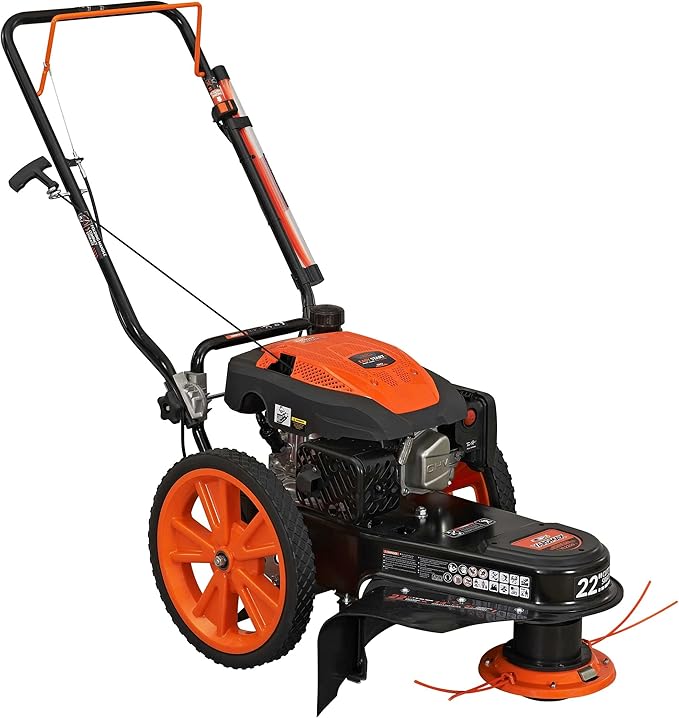 | YARDMAX YL2250 Trimmer | Check Price |
Our Selected Top 12 Walk Behind Weed Eater for Different Needs
This list features a variety of walk behind weed eaters designed to meet different yard maintenance needs. Each review explains how the tool performs, identifies who it’s best suited for, and highlights its main advantages and drawbacks to help you make an informed choice.
1. BILT HARD Self-Propelled Walk-Behind String Trimmer
Perfect for tackling tall grass and thick weeds, this walk-behind string trimmer stands out with its self-propelled feature, making it easier to handle than manual push models. It suits anyone with uneven or large lawns looking to reduce the physical effort usually needed for trimming and weed control.
Setting up the string trimmer is simple with a manual recoil start that quickly fires up the powerful 170cc 4-cycle engine. Once running, the self-propelled drive moves steadily at 1.9 mph, allowing smooth, controlled movement over slopes and rough ground.
Day-to-day use benefits from the steady speed, which lessens the strain found in non-propelled equipment, making longer sessions easier.
Power is solid enough to cut through dense weeds, thick grass, and even some light brush without bogging down. The build quality feels dependable and designed for outdoor toughness, holding up well to regular use. The most praised feature is its self-propelled system that truly reduces fatigue, whereas the most common complaint mentions the need to manually start the engine every time.
Many appreciate the self-propelled drive that makes navigating uneven terrain less physically demanding. The manual recoil start is the main drawback since it requires effort each time the mower needs to be restarted.
People with medium to large lawns featuring slopes or rough ground will find this machine easier to use than standard push trimmers. Those needing a model for very heavy brush might want to look for a stronger or specialized tool.
Pros
- Self-propelled for easier movement on slopes
- Powerful 170cc 4-cycle engine
- Handles dense weeds and light brush
- Steady speed reduces user fatigue
Cons
- Manual recoil start can be tiring
- Not suitable for very heavy brush
| Specification | Details |
|---|---|
| Engine Size | 170cc 4-Cycle OHV |
| Speed | 1.9 mph (3.06 km/h) |
| Drive Type | Self-Propelled |
| Manufacturer | Chongqing Rato Technology Co., Ltd |
| Model Number | TJA-1054-01 |
2. SENIX High Wheel Gas Walk Behind Brush Cutter
SENIX High Wheel Gas Walk Behind Brush Cutter is designed for tackling heavy weeds and brush across large yards. It shines with a large 22-inch cutting width, making it ideal for those managing extensive, tough terrain.
Its powerful 160 cc gas engine brings steady strength and reliability for demanding tasks.
Setup is straightforward for anyone accustomed to gas-powered tools, thanks to the 4-cycle engine that runs clean with low emissions. The high wheels handle uneven ground well, and five height settings let you adjust the cutting deck between 1.57 and 3 inches.
Day-to-day trimming is manageable since the durable wheels and large cutting capacity help finish jobs faster without constant passes.
Performance proves solid with the 22-inch cutting swath clearing thick brush effectively. The steel deck feels sturdy and built to last through rugged use.
Praise centers on its reliable power and low vibration, which reduces fatigue during prolonged use. One downside noted is the relatively heavy weight, making it less suitable for prolonged maneuvering in tight spaces.
The brush cutter receives high praise for its strong engine and effective large cutting capacity, making yard work feel quicker. The most common complaint involves the weight, which can be a challenge when maneuvering on uneven or confined areas.
People with large, open, and rugged yards will appreciate the power and coverage offered. Those with smaller yards or looking for a lighter, more compact model might want to consider alternatives better suited for agility and frequent turns.
Pros
- Large 22-inch cutting swath
- Low vibration 160 cc engine
- Five height adjustment positions
- Durable 14-inch rubber wheels
Cons
- Relatively heavy to push
- May be bulky in tight spots
| Specification | Details |
|---|---|
| Power Source | gasoline-powered |
| Engine Size | 160 cc 4-cycle |
| Cutting Width | 22 inches |
| Wheel Size | 14 inches rubber |
| Cutting Height Adjustment | 1.57-inch to 3-inch (5 positions) |
3. YARDMAX YL2250 170cc Gas Walk Behind String Trimmer
Using the YARDMAX YL2250 feels like having a powerful tool built for serious trimming along edges and in tough spots. It suits anyone tackling large yards or uneven terrain who needs strength and control without constantly repositioning the mower.
Its biggest strength lies in the offset head, making it easy to trim right up against fences and landscaping.
Setup is straightforward with a built-in cord caddy to store extra trimmer string, so you won’t be hunting for replacements mid-job. Adjusting the cutting height doesn’t require tools, five settings from 1.5 to 3.5 inches let you quickly match the grass length you want. The 14-inch ball bearing wheels roll over rough ground without much effort, which matters for daily tasks on various surfaces.
Performance-wise, this gas-powered trimmer tackles heavy-duty jobs fast, handling thick grass and weeds without bogging down. It’s solidly built to last, with rugged wheels and a sturdy frame. Most praise centers on how well it trims close to borders.
The common downside is its weight, which can be a bit much during longer sessions.
Strong points include the ability to trim right up to fences and detailed areas without repositioning, thanks to the offset head. The weight of the unit often comes up as a drawback, making extended jobs physically demanding for some users.
Those needing a powerful tool for large or uneven areas will appreciate the build and features. Prioritizing lighter weight or easier maneuverability is better suited to mostly flat, small yards where another model might be a better fit.
Pros
- Offset head trims easily along fences
- Tool-free height adjustment with 5 settings
- Large wheels handle rough terrain well
- Onboard string storage is very convenient
Cons
- Heavier than some walk-behind trimmers
- May require strength for prolonged use
| Specification | Details |
|---|---|
| Brand Name | YARDMAX |
| Model Number | YL2250 |
| Engine | 170cc Gas |
| Cutting Heights | 5 positions, 1.5 to 3.5 in. |
| Wheel Size | 14 in. ball bearing wheels |
| Warranty | 2 year manufacturer limited |
4. Earthquake Walk Behind String Mower 160cc

Great for tackling overgrown patches and large weeds, the Earthquake Walk Behind String Mower 160cc offers powerful cutting in a walk-behind design. It’s ideal for those who want to save their arms from handheld weed eating while still needing strong engine performance to handle tough jobs.
Setup is straightforward thanks to easy assembly and adjustable handlebars that help you find a comfortable grip. The wide 14.5” airless wheels keep the mower balancing steadily on uneven ground, making it less tiring to push around your yard. Engagement bail lets you pause and restart the cutting head quickly without shutting off the engine, which comes in handy for clearing debris or quick breaks.
Powered by a 160cc 4-cycle Viper engine, the mower handles thick weeds and heavy growth well. The build quality feels solid and reliable, supported by a 5-year warranty. The common complaint involves its weight and size making it a bit bulky for tight spaces, but it performs better than smaller handheld trimmers for the hardest weeds.
Cutting through dense, overgrown areas is made easier by the strong Viper engine and the ability to pause the cutting head without engine restarts. Users appreciate how steady and balanced it feels on various terrains thanks to the wide, airless wheels. The more frequent downside noted is the bulkiness, which can challenge navigation in confined areas.
Ideal for those with large, unruly yards needing serious power over handheld tools. Those expecting a lightweight, compact device for small tight gardens might want to consider a different option better suited to limited spaces.
Pros
- Powerful 160cc engine handles tough weeds
- Wide airless wheels for smooth movement
- Adjustable handlebar reduces operator fatigue
- Engagement bail stops cutting without turning off engine
Cons
- Bulky and heavy to maneuver in tight spots
- No included accessories or extra components
| Specification | Details |
|---|---|
| Engine | 160cc 4-cycle Viper engine |
| Cutting Diameter | 22” |
| Wheels | 14.5” airless wheels (2.5” wide) |
| Handlebar | Adjustable |
| Warranty | 5-Year Warranty |
5. AMERISUN 170cc Walk Behind String Trimmer

Built with a sturdy 170cc 4-stroke OHV engine, this walk behind string trimmer suits those needing solid power without fussing over fuel mix. Its single biggest strength lies in handling large, overgrown areas efficiently thanks to its wide cutting path and gas-powered design.
Setting it up is straightforward since there’s no need to mix oil and gas, which saves time and effort. The forced-air cooling in the engine keeps it running smoothly during longer sessions. Pushing it along feels manageable, and the wide 22-inch cutting path means covering ground is quicker, reducing the overall trimming time.
It cuts through tall grass, thick weeds, and brush with dependable power. The build feels rugged enough to handle rough areas but reviewers often mention it can be a bit heavy to maneuver for extended periods.
The engine’s reliability stands out, though, with few maintenance hassles reported.
The most frequent compliment highlights the strong engine power managing tough weeds and tall grass effectively. Commonly noted drawback is the weight, which can make extended use tiring for some users.
Anyone maintaining big yards, trails, or overgrown fence lines will find this model beneficial. Those with smaller yards or who prefer lighter equipment might want to look at other options.
Pros
- Powerful 170cc 4-stroke engine
- No need to mix oil and gas
- Extra-wide 22-inch cutting path
- Forced-air engine cooling
Cons
- Heavier to push for long periods
- May be bulky for small yards
| Specification | Details |
|---|---|
| Power Source | Gas Powered |
| Cutting width | 22 inches |
| Engine size | 170cc 4-stroke OHV |
| Cooling | Forced-air cooling |
6. Earthquake 60V Walk Behind String Mower

Battery runtime stands out as a real highlight here, with two 4Ah batteries offering up to 90 minutes of use. Best suited for anyone needing a walk behind weed eater that won’t quit early, especially for larger or longer jobs where consistent power matters.
Setting it up is straightforward, and you’ll appreciate the variable cutting speed dial to match the conditions. Changing the cutting line is simple, thanks to a thoughtful design, and you can adjust the cutting height easily without tools, ranging from 1.5 to 4.
The extra-wide 14 airless wheels help keep it stable on uneven ground.
The direct-drive brushless motor cuts through weeds efficiently while conserving battery life and minimizing maintenance needs. The build feels solid with well-sized wheels that handle rough patches without much fuss. Praise often goes to the long battery life, while the most frequent drawback is its weight, which might be noticeable during extended mowing sessions.
Long battery life is praised for supporting extended work without interruptions, while many find the weight challenging during lengthy use. The easy line replacement and adjustable height also get frequent mention as practical features. Maintenance is low thanks to the brushless motor setup.
Those handling medium to large overgrown areas will benefit most from the runtime and stability. Individuals needing ultra-light gear or those with very large properties needing more than 90 minutes per charge might look for alternate options.
Pros
- Up to 90 minutes runtime with two 4Ah batteries
- Tool less adjustable cutting height from 1.5″ to 4″
- Extra-wide 14″ airless wheels for rough terrain
- Simple line replacement with included starter pack
Cons
- Weight can be tiring over long periods
- Battery life might fall short for very large areas
| Specification | Details |
|---|---|
| Brand Name | EARTHQUAKE |
| Model Number | 44965 |
| Unit Count | 1 Count |
| Number of Packs | 3 |
| Manufacturer Part Number | 44965 |
| Number of Items | 1 |
7. Gas Walk Behind Brush Cutter 52CC 2-Stroke

Built for handling tough overgrown fields, the Gas Walk Behind Brush Cutter 52CC 2-Stroke suits anyone needing industrial-grade power without a big fuel bill. Its ability to mow and till in one pass stands out as a practical time-saver for those managing weeds and soil simultaneously.
Setting up this brush cutter is pretty straightforward thanks to its solid iron frame and spray molding process, giving a durable feel from the start. Day-to-day use focuses on controlling both mowing and soil loosening with two attached blades, so you’re not just clearing weeds but prepping the soil for better garden health while running the machine at a fuel-efficient rate of 0.18 gallons per hour.
Performance-wise, the 2-stroke engine provides enough power to cut through dense brush and thick weeds with industrial-grade strength. The all-metal build resists wear and impact well, making it feel reliable even in rough conditions.
The most noticeable downside mentioned in reviews involves the weight, which can be a bit heavy to maneuver in tighter spaces.
Strong praise for this unit centers on its toughness and dual functionality, making yard work less labor-intensive. Complaints mostly point to its heavy weight, which can become tiring during extended use or on uneven terrain.
People with large, overgrown areas or gardens needing soil prep while trimming will appreciate this model’s power and features. Those with smaller yards or difficulty handling heavier equipment might want to look for a lighter alternative.
Pros
- Handles dense brush and weeds efficiently
- Two-in-one mowing and soil loosening tool
- Low fuel consumption at 0.18 gallons per hour
- Durable premium iron construction
Cons
- Heavy to push in tight areas
- Only one unit included per purchase
| Specification | Details |
|---|---|
| Engine Type | 2-Stroke |
| Fuel Consumption | 0.18 gal/h |
| Material | Premium iron with spray molding |
| Function | Mowing and tilling (2-in-1) |
| Number of Loosening Blades | 2 |
8. Earthquake Walk-Behind String Mower 160cc

Overgrown yards and stubborn weeds don’t stand a chance with this walk-behind weed eater, ideal for homeowners tackling uneven ground or thick brush. Its standout feature is the Hurricane Cutting Head that handles tough grassy areas without getting caught up in weed wrap.
Setting up is quick since the cutting line can be changed without any tools, and that’s a real help when you’re out on the job. Adjusting the cutting width between 0.095” and 0.155” line options lets you switch between lighter trimming and tougher weeds easily. Height adjustments from 1” to 4” are fast, so you can adapt to different terrain without stopping for long.
The cutting power is solid, thanks to the 160cc engine, making light work of thick weeds while covering up to a 22” trail. It’s built to last with a design that avoids common weed wrap frustrations by leaving no spots for weeds to catch on.
A useful engagement bail lets you pause the head quickly, which comes in handy. Some mention that line replacement could still be easier despite the tool-less design.
Many appreciate the Hurricane Cutting Head for preventing weed wrap, making cutting through tough grass easier. The tool-less feature speeds up line changes but some feel it’s still somewhat fiddly to reload the line smoothly. The adjustable height is praised for convenience during varying cutting tasks.
Those needing a reliable walk-behind mower for thick, uneven weed patches will find this model suits them well. Users wanting multiple cutting width options or faster line loading might look at other alternatives rather than this single 22” cutting width setup.
Pros
- Hurricane cutting head avoids weed wrap
- Tool-less, quick cutting line changes
- Adjustable cutting height from 1” to 4”
- Engagement bail allows easy start and stop
Cons
- Line replacement could still be simplified
- Only one cutting head width option available
| Specification | Details |
|---|---|
| Brand Name | EARTHQUAKE |
| Model Number | 47325 |
| Unit Count | 1 Count |
| Cutting Width | Up to 22″ |
| Engine Size | 160cc |
| Cutting Line Options | 0.095” and 0.155” |
9. PROYAMA 170cc Walk Behind Weed Trimmer

170cc of power drives through thick brush and tall grass, making it ideal for large yards with stubborn overgrowth. Suited for anyone needing a strong, gas-powered walk behind weed trimmer that cuts a wide path without needing multiple passes.
Starting it requires a basic pull cord, and the heavy-duty 0.155-inch line handles thick weeds without frequent replacements. A 22-inch cutting width means fewer trips across your land, and the engine runs at 3600 rpm to keep up steady power during longer sessions.
The machine’s size demands some physical effort but balances well enough for standard yard work.
Cutting through dense vegetation happens without much struggle, thanks to the 6.64 foot-pounds torque and 5HP engine. Construction feels solid with durable parts, though the weight can tire some users if used extensively.
The biggest praise centers on how quickly it clears heavy weeds, while the most frequent gripe relates to its bulk making it less nimble around obstacles.
Quick cutting through thick weeds stands out the most, showing the power of its 170cc engine and wide 22-inch path. Some struggle with the machine’s weight and size, making it less suited for tight spaces or long sessions without breaks.
Best suited for those with large properties and dense overgrowth needing strong, steady cutting power. People who deal mostly with smaller yards or require nimble maneuvering might want to consider lighter, more compact models.
Pros
- Strong 5HP 4-cycle OHV engine
- Wide 22-inch cutting path
- Heavy-gauge 0.155-inch cutting line
- Consistent power at 3600 rpm
Cons
- Heavier weight requires effort over time
- Bulkier design limits maneuverability
| Specification | Details |
|---|---|
| Power Source | Gas Powered |
| Engine Size | 170cc |
| Cutting Width | 22 inches |
| Speed | 3600 rpm |
| Torque | 6.64 foot-pounds |
10. PowerSmart 170cc Walk Behind String Trimmer

Anyone with large, tough yards will find the PowerSmart 170cc Walk Behind String Trimmer a solid choice. Its biggest strength lies in the powerful 170cc 4-cycle engine, which makes cutting through dense weeds and tall grass feel much easier than with smaller machines.
Setting up involves unfolding the handle, which also folds back down for space-saving storage. The 14 wheels roll smoothly over uneven ground, and the adjustable cutting height lets you pick between 1.90 and 3.90.
The auto choke and easy-start ignition mean starting the engine takes very little effort, even after a break.
Cutting through a 22 swath with heavy-duty 0.155 line handles large areas quickly and efficiently. The build feels sturdy enough to manage rough terrain and thick brush.
Many appreciate how reliably powerful it is. Some find it a bit bulky on tight spots but that’s a trade-off for the cutting capacity.
The engine and wide 22″ cutting swath make clearing large, dense brush fast and effective. The power and easy-start features stand out, although the unit can be hard to maneuver in tight or confined spaces.
People with broad yards full of tall grass and weeds will appreciate the strength and cutting range. Those with smaller yards or requiring more nimble equipment might look for lighter, more compact alternatives.
Pros
- Strong 170cc engine handles thick weeds
- Easy-start ignition with auto choke
- Adjustable cutting height for different terrains
- Foldable handle for compact storage
Cons
- Can feel bulky in tight spaces
- Heavier than lightweight electric trimmers
| Specification | Details |
|---|---|
| Engine | 170cc 4-cycle OHV gas engine |
| Cutting Swath | 22 inches |
| Trimming Line Thickness | 0.155 inches |
| Wheel Size | 14 inches |
| Adjustable Cutting Height | 1.90 – 3.90 inches |
| Warranty | 2-year limited warranty |
11. Gas Walk Behind Brush Cutter 63CC 4-Stroke

Powerful and versatile, the Gas Walk Behind Brush Cutter 63CC 4-Stroke suits anyone needing a sturdy tool for mowing, tilling, and trenching. Its 63cc engine at 240 rpm makes tough yard jobs quicker and handles multiple tasks from a single machine.
Starting with a simple pull-start, operation is straightforward. The upright handheld design avoids bending over, making longer tasks less tiring.
One handle controls the throttle and stop switch, so managing speed and stopping the blades is easy and safe. This setup keeps you balanced and lets both hands work while controlling the machine smoothly.
Engine strength matches its multi-function task: clearing brush, preparing soil, and cutting with spiral blades. Built solidly by OMMUNICT, it feels durable though some find it a bit heavy for extended use. The main praise is for its efficiency in handling different yard chores.
A common downside is the weight, which can get tiring without breaks.
Performance stands out for efficiency in multiple yard tasks using its powerful 63cc engine and spiral blades. The weight has been noted as challenging during longer work periods, making quick breaks necessary to manage fatigue.
Gardeners needing a multi-use, strong engine with upright controls will like this brush cutter. Those looking for a lighter or faster-spinning tool might prefer a different model better suited to extended light-duty use.
Pros
- Strong 4-horsepower 63cc 4-stroke engine
- Mows, tills, and trenches with one tool
- Ergonomic upright handheld design
- Single handle with throttle and stop control
Cons
- Weight can be tiring for long sessions
- Limited blade speed at 240 rpm
| Specification | Details |
|---|---|
| Engine Type | 63CC 4-Stroke |
| Horsepower | 4 HP |
| Rotational Speed | 240 rpm |
| Brand Name | OMMUNICT |
| Model Number | Micro Cultivator with Engine |
12. BLACK+DECKER 3-in-1 Cordless Weed Eater and Mower

BLACK+DECKER 3-in-1 Cordless Weed Eater and Mower handles trimming, edging, and mowing in one cordless tool. Ideal for smaller yards and tricky spots like slopes, it shines by adapting quickly between functions without needing extra equipment.
Getting started involves attaching the removable wheeled deck for mowing or removing it when you want to trim or edge. The battery-powered design means no cords to manage, and it uses two Lithium Ion batteries, which keeps it running continuously. The automatic feed spool adjusts the line length so you don’t have to stop often for manual tweaks.
Cutting through grass and weeds feels smooth thanks to PowerDrive technology, which prevents bogging down in tough areas. The 12-inch cutting width covers a fair amount of ground for a compact machine.
The build feels solid enough for regular yard work, though some users find the battery life could stretch longer during bigger jobs.
Strongest praise centers on the quick switch from trimmer to mower, making yard work versatile and efficient. The most common drawback is the battery life, which some find insufficient when covering bigger yards in one go.
People with small to medium yards and uneven terrain will appreciate how it handles different tasks. Those with larger lawns may want a tool with a bigger battery capacity or mower deck for extended use.
Pros
- Convenient 3-in-1 tool for trimming, edging, mowing
- Automatic feed spool for continuous line adjustment
- Good for small yards and tight spaces
- Battery-powered with no cords to manage
Cons
- Batteries may need frequent recharging during large jobs
- Lawn mower deck width limits mowing to smaller areas
| Specification | Details |
|---|---|
| Power Source | Battery Powered |
| Cutting width | 12 inches |
| Number of Batteries | 2 Lithium Ion batteries required. (included) |
Best Walk Behind Weed Eaters Side by Side Comparison
| Product | Power Source | Cutting Width | Warranty | Model Number |
|---|---|---|---|---|
| BILT HARD String Trimmer | – | – | – | TJA-1054-0410 |
| SENIX High Wheel Brush Cutter | Gasoline-powered | 22 inches | – | – |
| YARDMAX YL2250 Trimmer | – | – | 2 year limited | YL2250 |
| Earthquake 160cc String Mower | – | – | 5-Year Warranty | 40314 |
| AMERISUN 170cc String Trimmer | Gas Powered | 22 inches | – | – |
| Earthquake 60V String Mower | – | – | – | 44965 |
| Gas 52CC Brush Cutter | Gas | – | – | 2-Stroke Push Brush Mower |
| Earthquake 160cc String Mower (Alt) | – | – | 5-Year Limited | 47325 |
| PROYAMA 170cc Weed Trimmer | Gas Powered | 22 inches | – | – |
| PowerSmart 170cc Trimmer | – | – | 2-year limited | DB6222 |
| Gas 63CC Brush Cutter | Gas | – | – | Micro Cultivator |
| BLACK+DECKER 3-in-1 Cordless | Battery Powered | 12 inches | – | – |
- Power Source–
- Cutting Width–
- Warranty–
- Model NumberTJA-1054-0410
- Power SourceGasoline-powered
- Cutting Width22 inches
- Warranty–
- Model Number–
- Power Source–
- Cutting Width–
- Warranty2 year limited
- Model NumberYL2250
- Power Source–
- Cutting Width–
- Warranty5-Year Warranty
- Model Number40314
- Power SourceGas Powered
- Cutting Width22 inches
- Warranty–
- Model Number–
- Power Source–
- Cutting Width–
- Warranty–
- Model Number44965
- Power SourceGas
- Cutting Width–
- Warranty–
- Model Number2-Stroke Push Brush Mower
- Power Source–
- Cutting Width–
- Warranty5-Year Limited
- Model Number47325
- Power SourceGas Powered
- Cutting Width22 inches
- Warranty–
- Model Number–
- Power Source–
- Cutting Width–
- Warranty2-year limited
- Model NumberDB6222
- Power SourceGas
- Cutting Width–
- Warranty–
- Model NumberMicro Cultivator
- Power SourceBattery Powered
- Cutting Width12 inches
- Warranty–
- Model Number–
How to Choose the Right Walk Behind Weed Eater
Choosing the right walk behind weed eater depends on factors like power, durability, and ease of use, as these affect performance and maintenance. Getting these aspects right ensures efficient weed control, reduces repair costs, and saves time during yard work.
Engine Power and Type
Working on a large yard with a small electric motor can quickly turn into a frustrating experience as the machine struggles to cut through thick weeds and grass. Gas-powered models offer higher horsepower, typically ranging from 3 to 6 HP, making them suitable for more demanding tasks and extended use.
Electric options, often rated by voltage between 40V and 80V, provide quieter operation and easier maintenance but may lack the power needed for dense overgrowth.
Battery life or fuel efficiency directly affects how long you can keep working without interruption. Gas engines require refilling and periodic tuning, while battery-powered units need sufficient runtime, often around 45 minutes to an hour on a full charge. Knowing your yard size and terrain helps in selecting a motor type that balances power and operating time, so you aren’t constantly pausing to recharge or refuel during the job.
Cutting Width and Height Adjustment
Switching between cutting wide-open spaces and narrow garden beds becomes easier with adjustable cutting widths. Typical models range from 16 to 26 inches; a wider deck covers more ground quickly but can be harder to maneuver in tight spots. For varied weed density, being able to shrink the cutting path helps prevent bogging down.
Height adjustment plays an important role, especially when managing uneven terrain or different plant heights. Look for simple, tool-free mechanisms that let you change cutting height on the fly, usually between 1 and 4 inches. Without this, the machine may scalp patches of grass or leave weeds uncut, leading to extra passes and wasted time.
Matching cutting width to yard size improves efficiency and reduces fatigue.
Durability and Build Quality
The build quality of the machine becomes obvious after a season or two of use. Frames made from steel or reinforced aluminum stand up much better to impacts and vibrations than plastic ones, which can crack or warp. Cutting components like blades or discs should be made of hardened steel or similar metals to resist wear.
Parts exposed to moisture, especially if you store the equipment outdoors or work in damp conditions, need corrosion resistance. Zinc or powder-coated finishes help prevent rust. A sturdy frame and good overall construction mean the machine won’t wobble or feel flimsy, maintaining consistent cutting performance and reducing repair needs.
Ease of Operation and Maneuverability
Spending hours pushing and guiding the equipment turns uncomfortable quickly if handles are poorly designed. Ergonomic grips help reduce hand fatigue, especially on longer sessions.
A well-balanced machine with a weight that’s manageable, usually between 30 to 50 pounds, makes movement less taxing.
Wheel quality greatly affects maneuverability. Large, treaded wheels roll easily over grass, dirt, and small obstacles. Features like adjustable handle height or self-propulsion can further ease handling by letting users tailor the fit and reduce the effort needed for forward motion, especially on slopes or thick vegetation.
Maintenance and Safety Features
Equipment that comes apart easily for cleaning and blade replacement eliminates a lot of hassle over time. Accessible parts encourage regular maintenance, which keeps the machine running smoothly.
A missing or difficult-to-remove blade guard can be a safety hazard, so its presence is critical.
Automatic shutoff features add an important safety layer by stopping the blade quickly if the handle is released. Clear instruction manuals and accessible troubleshooting guides save time when problems arise, helping users address common issues like blade jams or engine stalls without professional help.
Effective Maintenance Practices to Prolong the Life of Your Walk Behind Weed Eater
Regular cleaning after use prevents clogging and excessive wear. Removing debris from the cutting head and air vents keeps the engine running efficiently. Checking and replacing the cutting line often ensures a clean cut without straining the motor.
Fuel and oil levels should be monitored before each use to avoid engine damage. Examining spark plugs for fouling or wear lets the machine start more reliably.
Routine maintenance tasks to consider:
- Clean the air filter every 10 hours of use or more frequently in dusty conditions.
- Inspect and tighten bolts to prevent parts from loosening during operation.
- Lubricate moving parts according to the manufacturer’s guidelines.
- Store the spray head covered and away from moisture to avoid rust.
Adhering to these practices keeps the walk behind weed eater functioning longer and reduces repair costs over time.
Safety Precautions and Best Practices for Operating Walk Behind Weed Eaters
Wear sturdy footwear and long pants before starting your walk behind weed eater. The machine’s cutting line can throw debris far, so eye protection is essential.
Avoid loose clothing that could snag on moving parts.
Key safety steps during operation:
- Keep hands and feet well away from the cutting area while the machine is running.
- Operate the machine at a steady walking pace to maintain control and avoid strain.
- Turn off the engine before adjusting the cutting height or clearing jams.
- Check the work area for rocks, sticks, or other objects that might be thrown or cause damage.
Always follow manufacturer instructions and take breaks during extended use to remain alert and reduce fatigue.
Comparing Walk Behind Weed Eaters to Traditional String Trimmers and Alternatives
Walk behind weed eaters cover larger areas faster than handheld string trimmers because they combine pushing power with wider cutting paths. The design reduces user fatigue over extended jobs since they do not require lifting or swinging.
Differences compared to traditional string trimmers:
- Walk behind models typically have stronger engines and adjustable cutting widths, suited for heavy weeds and uneven ground.
- String trimmers excel in tight spaces, edges, and detail work where push models cannot maneuver easily.
- Alternative tools like brush cutters or flail mowers offer more aggressive cutting but come with higher cost and complexity.
Choosing between these depends on yard size, weed density, and user strength. For large patches, walk behind weed eaters often balance efficiency with ease of use.
People Also Asked
How Do I Choose the Right Size Walk Behind Weed Eater?
Choose a walk behind weed eater that matches the size of the area you plan to maintain. Smaller models work well for tight spots, while larger ones cover more ground quickly. Consider the engine power and cutting width for efficient trimming in your specific yard.
What Safety Precautions Should I Follow When Using a Weed Eater?
Always wear protective gear like gloves, safety glasses, and sturdy shoes when operating a weed eater. Clear the area of stones or debris beforehand to avoid flying objects. Make sure the machine is off before adjusting the blade or cleaning around the wheels.
How Long Does a Typical Walk Behind Weed Eater Last?
A typical walk behind weed eater can last several years with proper maintenance. Regularly check the oil, replace worn blades, and keep the engine clean. Storing it in a dry, sheltered spot helps prevent rust and mechanical issues.
What Common Problems Occur with Walk Behind Weed Eaters?
Common problems include blade dullness, engine stalling, and difficulty starting. Blades often wear down from hitting hard objects, so sharpening or replacement is frequent. Keeping the air filter clean and using fresh fuel prevents engine troubles.
Can I Use Different Types of Blades with This Weed Eater?
Many walk behind weed eaters accept different blade types such as metal blades for thick weeds and plastic ones for lighter vegetation. Check the user manual for compatible options and switch blades as needed for the task to get better results and avoid damaging the machine.
Conclusion
Choosing a walk behind weed eater comes down to cutting power, maneuverability, and durability. A machine that can handle your type of terrain without frequent maintenance will save time and frustration.
Also consider how easy it is to start and control, especially if you have a lot of ground to cover.
Match the walk behind weed eater to the size of your yard and how often you’ll be using it. Spending more upfront makes sense if this tool will see heavy use. For smaller spaces or occasional yard work, a simpler model might be enough.
Check the comparison table and product details above to find the right fit for your needs and budget.

I’m Cody Harrison, a lifelong hunter who has spent many seasons in the woods, marshes, and open country. I write about hunting gear, rifle and bow setups, scouting strategies, tree stands, and field safety. I share lessons from real hunts to help both beginners and experienced hunters prepare better, hunt smarter, and get more out of every trip.


