
Top 12 Best Jigsaw Blade for Composite Decking Revealed!
Cutting composite decking with a cheap or wrong jigsaw blade often leads to splintered edges and slow progress. The best jigsaw blade for composite decking tackles dense materials without chipping or excessive heat build-up, making the job smoother and cleaner. Using a blade designed specifically for composite materials can save time and frustration during installation or repairs.
Blades made from high-speed steel or carbide-tipped teeth last longer against tough composite boards. Tooth design matters too; a fine tooth count around 10-14 teeth per inch helps reduce splintering and gives a smoother finish. Ensuring the blade fits your jigsaw properly also prevents wobbling, which can cause uneven cuts and damage the material.
Need a Quick Check?
| Image | Product | Price |
|---|---|---|
Our Top Picks 1  | Diablo Carbide Jig Blade | Check Price |
Our Top Picks 2  | Assorted T-Shank Blades | Check Price |
Our Top Picks 3  | BOSCH Carbide Jig Blades | Check Price |
Our Selected Top 12 Jigsaw Blade for Composite Decking for Different Needs
This list features twelve jigsaw blades designed specifically for cutting composite decking, each evaluated for performance, durability, and precision. Readers will discover which blades suit different project needs, along with their strengths and limitations to help choose the most appropriate option.
1. Diablo Carbide T-Shank Jig Saw Blade
Diablo Carbide T-Shank Jig Saw Blade is designed for cutting composite decking with impressive longevity. Best suited for anyone working with dense materials like composite decking, wood, and PVC, its biggest strength lies in extreme durability, providing up to 50 times longer cutting life compared to standard blades.
Setting up the blade is straightforward due to its T-shank design, which fits most jigsaws easily. Day-to-day cutting through composite decking goes smoothly thanks to the Perma-SHIELD non-stick coating that reduces heat and friction.
This means the blade rarely overheats or melts material, making it reliable for longer cuts without needing frequent replacements.
Performance stands out with TiCo Hi-Density carbide material, letting the blade stay sharp and cut cleanly through tough surfaces like plywood and pressure-treated wood. It handles thick composite decking with ease but may draw some critique for its price relative to standard blades. Its build quality makes it a durable choice for demanding applications.
Durability and clean cuts stand out, with users praising its long-lasting sharpness and melt-free cuts on composite decking. Some find the price steep for a single blade, especially compared to cheaper options that wear out faster.
Those needing a blade that lasts through heavy composite work will appreciate this choice. People on a tight budget or needing multiple blades at once might look for more economical sets instead.
Pros
- Up to 50X longer cutting life than standard blades
- Perma-SHIELD coating reduces heat and friction
- Cuts dense composite decking and wood cleanly
- T-shank fit works with most jigsaws
Cons
- Higher cost compared to basic blades
- Only sold as a single blade, not in packs
| Specification | Details |
|---|---|
| Brand Name | Diablo |
| Model | DJT144DHM |
| Number of Items | 1 |
| Set Name | Single Item |
| Included Components | Diablo by Freud Diablo DJT144DHM 4 in. 5/7 TPI Carbide |
| Manufacturer | Freud |
2. Assorted T-Shank Jigsaw Blades Set
Working with composite decking feels smoother using these assorted T-shank jigsaw blades. Ideal for anyone needing variety and reliability in one set, they stand out for offering a wide range of blade types suited to different cuts.
The biggest strength lies in having 50 blades readily available for different needs.
Setting up takes just a quick blade swap thanks to the T-shank design’s easy fit on compatible jigsaws. Daily cutting tasks benefit from the assortment since you can pick a blade designed for finer or coarser cuts depending on the section of decking.
The range helps manage composite wood, minimizing blade changes while maintaining control and precision.
Cutting through composite materials is well handled, with blades showing sturdy build quality that holds up under frequent use. Many appreciate the variety as it covers a lot of bases, while some find the blades dull quicker than expected. The construction is solid enough for composite decking, though occasional sharpening or replacement might be needed sooner than hoped.
Having 50 diverse blades in one set is a major advantage for different cutting jobs, but many note the blades lose sharpness more quickly during extended cutting. This longevity aspect stands out when working on tough composite materials.
Anyone tackling various cuts on composite decking with a compatible jigsaw will find this set handy and flexible. Those needing blades with longer edge retention for very intensive cutting might look for options specifically emphasizing durability over variety.
Pros
- Wide assortment for various cutting needs
- Easy T-shank fitting on most jigsaws
- Good blade variety for different materials
- Sturdy build for composite decking
Cons
- Blades may dull faster with heavy use
- Single unit count despite 50 blades included
| Specification | Details |
|---|---|
| Brand Name | MRCGTCE |
| Model | CSM-CSMDE2-150 |
| Unit Count | 1 Count |
| Number of Items | 50 |
| Manufacturer | MRCGTCE |
| Part Number | CSM-CSMDE2-150 |
3. BOSCH Carbide Teeth T-Shank Jig Saw Blades
Perfect for anyone working with composite decking or laminate, these Bosch Carbide Teeth T-Shank Jig Saw Blades stand out for lasting a solid ten times longer than standard blades. Their blend of durability and precision makes them great for tougher materials that usually wear blades out fast.
Switching blades on your jigsaw is quick thanks to the T-shank design that fits most models securely. The thin kerf keeps cuts clean and reduces heat buildup, so blade life stretches further during regular use.
The advanced tooth design cuts smoothly on both sides, meaning less sanding and a tidier finish when tackling composite boards or laminated surfaces.
Cuts come out sharp and chip-free with 14 teeth per inch, tackling brittle and hard materials without a fuss. The carbide brazing keeps the teeth sharp longer, so the blade stays effective across multiple projects. Some mention that it’s a bit on the pricey side for a set of three, but most agree the quality makes up for that.
These blades get praised for their long life and clean cuts in tricky materials, making them a reliable choice for layered or brittle decking. Some users note the cost and limited quantity might not fit every budget or project scale.
Ideal for anyone needing precision cuts and durability when working with laminates or composites. Those looking for budget options or larger packs may want to explore alternatives.
Pros
- Lasts 10 times longer than standard blades
- Thin kerf reduces material removal and heat
- Advanced tooth design cuts clean on both sides
- Fits standard T-shank jigsaws perfectly
Cons
- Priced higher than typical bi-metal blades
- Blade count limited to three per pack
| Specification | Details |
|---|---|
| Brand Name | Bosch |
| Model | T128BHM3 |
| Unit Count | 3 Count |
| Item Type Name | 3 pc. 3.62 In. 14 TPI Carbide Teeth T-Shank Jig Saw Blades for Laminates |
| Part Number | T128BHM3 |
4. Assorted T-Shank Jigsaw Blades Set

High carbon steel construction allows these jigsaw blades to cut through composite decking with durability and precision. Designed for those needing versatility in cutting various materials, the set’s T-shank grip ensures easy changes and steady control.
Setting up the blades is straightforward thanks to the T-Handle design, which fits without the need for screws. Switching between different blade types for metal, clean wood, or speed cuts feels smooth and secure, making day-to-day use reliable even when working on thicker composite materials.
Cutting performance is solid, delivering clean and quick cuts thanks to the high carbon steel quality. The blades hold up well over time without dulling quickly.
One common issue mentioned is occasional blade breakage, but this is reduced by the easy-to-install T-shank design that avoids forcing screws.
The blades deliver clean and fast cuts with lasting wear thanks to high carbon steel, though some users notice breakage issues during tougher jobs. The T-shank grip reduces installation hassle and extends blade life by avoiding screw over-tightening.
Those working with a mix of materials or needing quick blade swaps will find this set very handy. Users focused exclusively on composite decking with heavy-duty needs might prefer blades specifically designed for composites to minimize breakage risks.
Pros
- T-shank design for quick blade changes
- High carbon steel for better durability
- Variety of blades for metal and wood
- Good wear resistance and longevity
Cons
- Some blades prone to breakage under heavy use
- Not specialized solely for composite decking
| Specification | Details |
|---|---|
| Brand Name | Romeda |
| Model | 14QXJT0001 |
| Number of Items | 10 |
| Set Name | 10 Piece Jig Saw Blades |
5. Bosch T301CHM Plastic Composites Jigsaw Blade

Durability stands out right away with the Bosch T301CHM Plastic Composites Jigsaw Blade, especially designed for cutting Wood-Plastic Composite boards and solid surface panels. It suits anyone working on patios or solid surface kitchen and bathroom installations who needs clean, straight cuts without constantly changing blades.
Setup is easy since it fits all T-shank jigsaws, so you can quickly swap old blades for these. Daily cutting feels smooth and reliable thanks to Bosch’s carbide technology, which keeps the blade sharp much longer than standard blades. Using it on solid surface panels or composite decking, the blade stays strong and cuts straight, making repetitive jobs less of a hassle.
In terms of performance, the carbide material truly delivers on long-life and durability, holding up even on tougher solid surfaces. It cuts straight through composite decking with minimal effort and consistent precision. The blade is well made and holds its edge well, although some have mentioned it’s not ideal for curved or intricate cuts due to its design for straight cuts only.
Durability and clean straight cuts are praised most, with users highlighting how well the blade performs on solid surfaces and WPC boards. The common downside is its limited use for anything beyond straight cuts, which some find restrictive for varied projects.
People focusing on straight and precise cuts in composite decking and solid panels will find this blade excellent. Those needing more flexibility or complex shapes might prefer blades designed for curved cuts or multi-purpose tasks.
Pros
- Long-lasting carbide blade stays sharp
- Fits all T-shank jigsaws easily
- Perfect for straight cuts on composite decking
- Included set of three blades
Cons
- Not suited for curved or intricate cuts
- Single blade length limits versatility
| Specification | Details |
|---|---|
| Brand Name | Bosch |
| Model | 2608900566 |
| Number of Items | 3 |
| Item Length | 117 mm |
| Blade Type | T-shank |
| Technology | Carbide Technology |
6. BOSCH T234X Progressor Wood Jigsaw Blades

Designed specifically for composite decking, these blades make precise, clean cuts without chipping or splintering. Perfect for anyone needing reliable plunge cuts in dense materials, their biggest strength lies in their sharp plunger tip and side set teeth that handle composite wood excellently.
Setting up with a standard T-shank jigsaw is quick and simple, thanks to the universal 4-1/2 length. Daily use highlights the progression from small to large tooth pitch, allowing smoother and more efficient cutting through tricky composite boards.
The blades remain sharp and steady, making plunge cuts accurate and clean every time.
Cutting through composite decking happens with minimal tear-out, a sign of thoughtful design. These Bosch blades are well-made, balancing durability with precision.
The sharp plunger tip ensures fast starts without needing extra effort. Common complaints mention the blade length might feel limiting in deeper cuts but most praise the consistent, splinter-free finish they produce.
Blade users appreciate the sharp plunger tip that allows for quick and accurate plunge cuts, making work on composite decking much easier. The most frequent downside heard is that the 4-1/2 inch length sometimes feels too short when facing thicker boards or deeper cuts. The blades maintain smooth, splinter-free edges.
Those doing regular composite decking work will find these blades match the job well thanks to their specialized design. Anyone needing longer blades for deeper cuts might want to look elsewhere, but for standard composite material jobs, these blades deliver consistent, clean results.
Pros
- Sharp plunger tip for fast plunge cuts
- Designed specifically for composite materials
- Side set teeth reduce splintering
- 5 blades included for good value
Cons
- Blade length may limit deeper cuts
- Single count packaging can be confusing
| Specification | Details |
|---|---|
| Brand Name | Bosch |
| Model | T234X |
| Unit Count | 1 Count |
| Set Name | 5-Pack |
| Tooth Design | Side set teeth, small to large tooth pitch |
| Length | 4-1/2 inches |
7. LENOX U-Shank Wood Cutting Jigsaw Blades
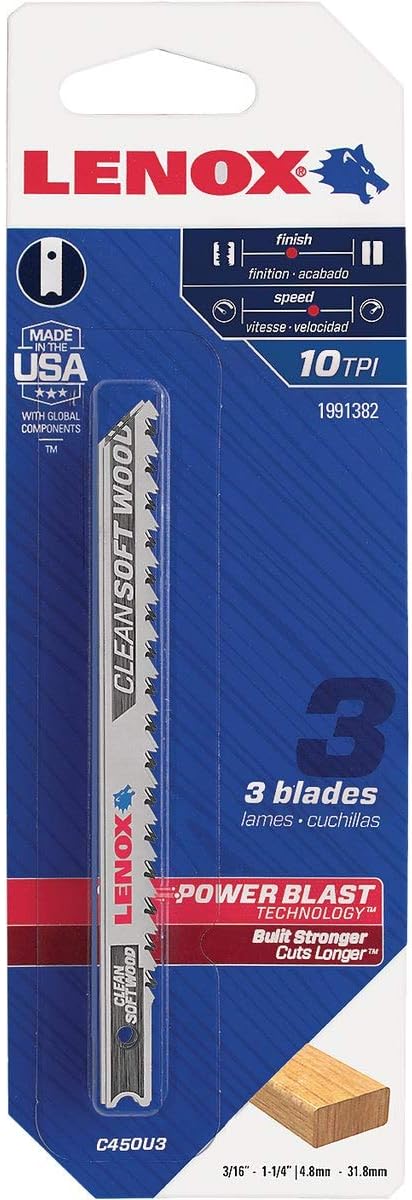
Cutting through composite decking without splintering or breaking blades can be tricky. These Lenox U-Shank Wood Cutting Jigsaw Blades suit anyone looking for clean, precise cuts in various materials like wood and composites.
Their standout feature is durability thanks to Power Blast Technology, which helps reduce blade breakage during tough jobs.
Setting up the blades is straightforward because of the common U-shank design that fits most jigsaws. The blades are 4 inches long with 10 teeth per inch, making them ideal for finish cuts on softer and harder woods, plastics, and composite decking.
The precision ground teeth keep cuts clean, reducing extra sanding or trimming after cutting.
Performance in daily use delivers a reliable clean cut through composite materials without excessive chipping. The blades hold up well over time due to high-speed blasting that hardens them, adding to their lifespan.
Some mention occasional issues with blades dulling faster with very dense composites, but the durability generally stands out as a strong point for typical use.
Lenox blades are praised for their durability and ability to make consistently clean cuts. Some users find they dull quicker when frequently cutting dense composite decking, requiring blade changes more often than expected.
People working mainly with composite decking and wood will appreciate these blades for precision and durability. Those needing longer-lasting blades on very hard composites might want to explore alternatives with tougher tooth materials or lower TPI options.
Pros
- Durable due to Power Blast Technology
- Clean, precise finish cuts
- Fits standard U-shank jigsaws
- Suitable for wood, plastic, composites
Cons
- May dull faster on very dense composites
- Only 3 blades per pack, might need extras
| Specification | Details |
|---|---|
| Brand Name | Lenox |
| Model | 1991382 |
| Blade Length | 4″ |
| Teeth Per Inch (TPI) | 10 |
| Set Count | 3 |
| Shank Type | U-Shank |
8. Artu U-Shank Tungsten Carbide Grit Jigsaw Blade

Tungsten carbide grit on the blade edge allows cutting not just forward but sideways, making it perfect for composite decking and tougher materials. Ideal for anyone needing a blade that handles various dense and composite surfaces with precision and reliability.
Installing the blade is straightforward given its U-shank design, fitting most standard jigsaws. Daily cutting feels smooth since it works on both the up and down stroke, which means less resistance and cleaner cuts on tricky composite decking materials. The grit edge provides solid durability, so it doesn’t wear down quickly during regular use.
Performance is strong across a range of materials, from composites to hardwood and even ceramic tile. Built with tungsten carbide grit, it maintains sharpness longer than typical blades.
The most common praise notes how well it cuts sideways and forwards, but some find it less suited for ultra-precise, fine-detail cuts due to its grit edge texture.
The blade is praised for cutting smoothly in multiple directions and holding up well on composites and tough surfaces. Most common issue is that the grit edge sacrifices some precision on very fine and delicate cuts. It shines performing heavy-duty tasks rather than intricate trimming.
Users frequently working with composite decking or similarly dense materials will find this blade a strong choice. Those needing extremely precise, fine-detail cuts should consider other blades designed specifically for delicate work or finer tooth patterns.
Pros
- Cutting on both up and down strokes
- Tungsten carbide grit edge for durability
- Supports side cutting as well as forward
- Compatible with standard U-shank jigsaws
Cons
- Not ideal for very detailed fine cuts
- Single blade unit limits immediate replacements
| Specification | Details |
|---|---|
| Brand Name | ARTU-USA |
| Model | 1652 |
| Item Type Name | 3″ Tc Jigsaw Blade |
| Number of Items | 1 |
| Included Components | Blades – Jig Saw, Jig Saw Blade, Power Tool Accessories |
| Part Number | 1652 |
9. Diablo Bi-Metal Wood Cutting Jig Saw Blades

Woodworkers and deck installers tackling composite or clean wood cuts will appreciate these blades for their durability and speed. Diablo Bi-Metal Wood Cutting Jig Saw Blades stand out mainly because their ultra-hardened teeth last much longer than typical blades, which means fewer blade changes during big projects.
Setting up these blades is straightforward since the T-shank fits most jig saws, no matter the brand, saving time searching for compatibility. The fast plunge tip makes it easier to start cuts quickly, which helps maintain good workflow on the job. They handle framing, decking, and plywood with fast, clean cuts thanks to the optimized tooth design, making your daily cutting smoother and more precise.
These blades deliver fast wood cutting with smooth edges due to their hardened teeth and carefully designed geometry. The blades hold up well during extended use, cutting much longer than standard blades before needing replacement.
Some users mention the price can be higher than generic alternatives, but the extended life often justifies the cost.
These blades are praised for their long lifespan and fast, clean cutting ability, reducing downtime on the job. The most common drawback is their cost, which may be higher compared to standard wood-cutting blades, but many find the durability worth it.
People focused on wood projects, including decking and general framing, will benefit from these blades. Users needing blades for diverse, multi-material jobs might want to look elsewhere since these are tuned mainly for wood.
Pros
- Ultra-hardened teeth last up to 5X longer
- Fast plunge tip for quick starts
- Fits all combo and most U-shank jig saws
- Optimized tooth geometry for clean cuts
Cons
- Price higher than generic blades
- Only suitable for wood and clean materials
| Specification | Details |
|---|---|
| Brand Name | Diablo |
| Model | DJT144DF5 |
| Unit Count | 5 Count |
| Included Components | 4 in. 6 TPI Bi-Metal T-Shank Jig Saw Blades for Fast Wood Cuts (5-Pack) |
| Part Number | DJT144DF5 |
10. Diablo Carbide T-Shank Jig Saw Blade

Carbide teeth deliver up to 50 times longer life, making this blade ideal for cutting composite decking. It suits anyone needing durability in wood, metal, or plastic, standing out for lasting way beyond typical blades under tough conditions.
Setting up is straightforward with its standard T-shank fitting, compatible with most jig saws. The aggressive tooth design makes cutting feel smooth and fast, reducing the effort and resistance you usually experience.
A special non-stick coating helps keep the blade cool and clean, so it runs efficiently without slowing down from heat or pitch build-up during longer jobs.
The construction includes a reinforced carbide tip that holds up well under impact, allowing precise cuts without frequent replacements. It handles composite decking cleanly and steadily, praised mostly for its lasting sharpness. Some note it’s a heavier blade compared to simpler ones, which might not suit delicate, low-power saws as easily.
The strongest praised feature is the blade’s extended life, making it reliable for frequent cutting without needing replacements. The most common drawback noted is its weight, which can cause extra strain on cordless or less powerful jig saws, potentially affecting control.
Anyone working extensively with composite decking and other materials will appreciate its durability and clean cutting. Using a lighter blade can improve handling when you often work with lower powered or very lightweight jig saws.
Pros
- Lasts up to 50 times longer than standard blades
- Fast, smooth cuts with aggressive tooth design
- Non-stick coating limits heat and pitch build-up
- Reinforced carbide tip resists impact damage
Cons
- Heavier blade may strain less powerful jig saws
- Single blade per pack might not suit frequent use
| Specification | Details |
|---|---|
| Brand Name | Diablo |
| Model | DJT367XHM |
| Included Components | Diablo 5-1/4″ 5/7 TPI Carbide T-Shank |
| Unit Count | 1 Count |
| Item Type Name | Diablo 5-1/4″ 5/7 TPI Carbide T-Shank General Purpose Jig Saw Blade |
11. T344D T-Shank High Carbon Steel Jigsaw Blades

Qjaiune T344D T-Shank High Carbon Steel Jigsaw Blades cut through composite decking with precision and speed. Ideal for those needing blades that handle a variety of materials, these blades stand out for their durable high-carbon steel construction and versatility.
Setup is straightforward thanks to the T-shank design, which fits most t-shank jigsaws without requiring extra screws. Installing and swapping blades is quick, making day-to-day use less cumbersome.
The 5-inch working length and 0.15 tooth spacing suit cutting thicknesses from 0.2 to 2, providing a good balance of control and efficiency when working on decking or similar materials.
Cutting performance is reliable with sharp, well-spaced teeth (6 TPI), enabling smooth, accurate cuts across composite decking and other hard materials like hardwood and fiberboard. Built from high-quality high-carbon steel, the blades hold up well over time. Common feedback highlights how quickly and cleanly they cut, while some note that durability can vary depending on material hardness.
These blades cut quickly and cleanly, praised for their sharpness and versatility, but some users find the durability less consistent when used on tougher materials. Installing the blades is easy due to the T-shank design, which holds securely without extra screws.
Anyone working regularly with composite decking and similar materials that fit within the thickness range will appreciate these blades. Those requiring very fine or intricate cuts or extreme blade longevity might consider more specialized options.
Pros
- Fits all T-shank jigsaws without screws
- Sharp teeth for fast, accurate cuts
- Durable high-carbon steel material
- Works on various materials beyond composite decking
Cons
- Durability varies with harder materials
- Limited to 6 TPI, not ideal for very fine detail cuts
| Specification | Details |
|---|---|
| Model | T344D |
| Material | High-Carbon Steel |
| Tooth Spacing | 0.15″ / 4mm |
| Working Length | 5″ / 125mm |
| Total Length | 6″ / 150mm |
| Application Range | 0.2″ – 2″ / 5 – 50mm |
12. HIGHDRIL Diamond T-Shank Jigsaw Blades

Cutting composite decking with ease feels straightforward using these HIGHDRIL Diamond T-Shank Jigsaw Blades. Suited for anyone needing clean, precise cuts in tough materials, their standout strength is the diamond grit edge that slices efficiently through dense surfaces like fibre-cement or laminates.
Setup involves fitting the 4-inch blades onto your jigsaw’s T-shank, which locks them firmly in place. Day-to-day use benefits from the thinner 0.8mm steel thickness combined with diamond grit.
Using them wet helps reduce dust and extends blade life. They handle both straight and curved cuts, making tricky angles much simpler to manage with less tearing or chipping.
The diamonds are vacuum brazed, so they stay put and cut finely without wearing out too fast. Strength comes from a heat-treated steel backer that resists bending or breaking during use.
Most praise highlights how clean the cuts are in composite decks and other tough materials. A common gripe involves needing wet use for optimal blade life, which isn’t always convenient.
These blades receive strong praise for delivering clean, precise cuts in composite decking and other hard materials, thanks to their durable diamond coating and solid steel backing. The need to use them wet to minimize dust and maximize blade life appears as a drawback for those seeking dry cutting convenience.
People working regularly on composite decks or similar materials will appreciate the blade’s cutting quality and stability. Those expecting fast, dry cuts might prefer blades designed for such conditions rather than these, which perform best when used wet and carefully.
Pros
- Durable diamond coating stays sharp longer
- Works well for straight and curved cuts
- Vacuum brazed diamonds prevent flaking
- Strong heat-treated alloy steel backing
Cons
- Best performance with wet use only
- Cutting speed can feel slow for harder materials
| Specification | Details |
|---|---|
| Diameter | 4 inch/100mm |
| Blade Thickness | 0.8mm steel with diamond grit edge |
| Blade Length | 76mm |
| T-Shank Design | Maximum grip and stability |
| Diamond Height | 2mm |
Best Jigsaw Blades for Composite Decking Comparison
| Product | Brand | Blade Type | Size | Tooth Per Inch (TPI) |
|---|---|---|---|---|
| Diablo Carbide Jig Blade | Diablo | Carbide | 4 in. | 5/7 TPI |
| Assorted T-Shank Blades | MRCGTCE | Assorted T-Shank | – | – |
| BOSCH Carbide Jig Blades | Bosch | Carbide | 3.62 in. | 14 TPI |
| Mixed T-Shank Blades | Romeda | Mixed T-Shank | – | – |
| Bosch T301CHM Plastic Blade | Bosch | Plastic Composites | 117 mm | – |
| BOSCH T234X Wood Blades | Bosch | Wood | – | – |
| LENOX U-Shank Wood Blades | Lenox | Wood U-Shank | 4 in. | 10 TPI |
| Artu U-Shank Carbide Blade | ARTU-USA | Carbide U-Shank | 3 in. | – |
| Diablo Bi-Metal Wood Blades | Diablo | Bi-Metal Wood | 4 in. | 6 TPI |
| Diablo Carbide Jig Blade XL | Diablo | Carbide | 5-1/4 in. | 5/7 TPI |
| T344D High Carbon Blades | Qjaiune | High Carbon | – | – |
| HIGHDRIL Diamond T-Shank | HIGHDRIL | Diamond T-Shank | 4 in. | – |
- BrandDiablo
- Blade TypeCarbide
- Size4 in.
- Tooth Per Inch (TPI)5/7 TPI
- BrandMRCGTCE
- Blade TypeAssorted T-Shank
- Size–
- Tooth Per Inch (TPI)–
- BrandBosch
- Blade TypeCarbide
- Size3.62 in.
- Tooth Per Inch (TPI)14 TPI
- BrandRomeda
- Blade TypeMixed T-Shank
- Size–
- Tooth Per Inch (TPI)–
- BrandBosch
- Blade TypePlastic Composites
- Size117 mm
- Tooth Per Inch (TPI)–
- BrandBosch
- Blade TypeWood
- Size–
- Tooth Per Inch (TPI)–
- BrandLenox
- Blade TypeWood U-Shank
- Size4 in.
- Tooth Per Inch (TPI)10 TPI
- BrandARTU-USA
- Blade TypeCarbide U-Shank
- Size3 in.
- Tooth Per Inch (TPI)–
- BrandDiablo
- Blade TypeBi-Metal Wood
- Size4 in.
- Tooth Per Inch (TPI)6 TPI
- BrandDiablo
- Blade TypeCarbide
- Size5-1/4 in.
- Tooth Per Inch (TPI)5/7 TPI
- BrandQjaiune
- Blade TypeHigh Carbon
- Size–
- Tooth Per Inch (TPI)–
- BrandHIGHDRIL
- Blade TypeDiamond T-Shank
- Size4 in.
- Tooth Per Inch (TPI)–
How to Choose the Best Jigsaw Blade for Composite Decking
Choosing the right jigsaw blade for composite decking depends on the blade’s material, tooth design, and durability to handle tough, abrasive surfaces without dulling quickly. Selecting the proper blade ensures clean cuts, reduces wasted materials, and prevents damage to both the blade and decking.
Blade Material and Coating
Composite decking can quickly wear down blades made of softer metals. Common steel blades tend to dull fast, causing rough cuts and frequent blade replacements. Blades made of high-carbon steel or bi-metal alloys last noticeably longer and resist heat damage, which is essential when cutting denser materials.
The coatings play an important role in preventing rust and corrosion, especially if you store blades in humid environments. Titanium or carbide coatings not only reduce wear but also help maintain blade sharpness over multiple uses.
Maintaining sharpness means cleaner, more precise cuts without excessive force that could damage the decking.
Tooth Design and Count
Composite materials are dense and layered, so blades with standard triangular teeth often produce splintered edges. Blades with a reverse tooth design or ground teeth with curved tips minimize tearing and chipping by slicing fibers cleanly.
For smooth cuts, blades with approximately 10 to 14 teeth per inch (TPI) perform best. Lower TPI blades cut faster but rougher, while higher TPI blades create smoother edges at slower speeds.
Choosing the right tooth shape and count makes a big difference when shaping these materials.
Compatibility and Fit
Jigsaws come with different blade attachment systems, such as T-shank and U-shank designs. Using a blade that doesn’t fit securely leads to wobbling which ruins cut accuracy and can be unsafe. Most modern jigsaws accept T-shank blades, which hold firmly and install without extra tools.
For older or specialized models, blades sometimes require adapters to fit correctly. While universal adapters exist, they may reduce stability. Ensuring you pick blades designed for your jigsaw or a trusted adapter prevents issues during work.
Cutting Performance and Efficiency
Cutting dense composite decking with a dull or inefficient blade causes overheating that damages both blade and material. High-quality blades cut quickly without excessive heat buildup, maintaining clean edges and consistent speed.
Vibration control features in the blade or jigsaw improve comfort, reducing hand fatigue and increasing cutting precision. Blades that retain sharpness and have suitable flexibility perform well on both straight and curved cuts, essential for fitting decking pieces properly.
Blade Thickness and Flexibility
Thicker blades resist bending during tough cuts but can limit maneuverability on curves or intricate shapes. Thinner blades offer the flexibility needed to follow complex patterns but risk breaking if too thin.
A balanced thickness between 0.05 and 0.07 inches usually works well for composite decking. This gives enough rigidity for stability and control while allowing smooth navigation of curves without snapping the blade during detailed work.
Tips for Achieving Clean Cuts on Composite Decking with a Jigsaw
Choosing the right blade speed and pressure makes a significant difference when cutting composite decking with a jigsaw. Composite material tends to chip or splinter if cut too quickly or with excessive force.
To achieve cleaner cuts:
- Use a blade designed with fine, sharp teeth suitable for plastics or laminates since composite decking contains plastic resins.
- Keep the jigsaw moving at a steady, moderate pace rather than rushing through the cut.
- Secure the decking firmly to prevent vibration or movement during the cut.
- Score the cut line lightly with a utility knife beforehand for better edge control.
These steps help minimize tear-out and keep edges neat, reducing sanding and finishing work afterward. This practical approach saves both time and materials.
How to Properly Maintain and Extend the Life of Your Jigsaw Blades
Regular cleaning and inspection of jigsaw blades extend their useful life significantly, especially when cutting abrasive materials like composite decking.
A clean blade cuts more efficiently, so remove resin buildup and debris after each use. A simple way is to scrub the teeth gently with a wire brush or soak the blade in a mild solvent if resin hardens.
- Avoid using dull blades because they generate heat, which damages both the blade and the decking.
- Store blades in a dry place to prevent rust and corrosion.
- Rotate blades in and out of use if multiple are available to distribute wear evenly.
- Replace blades as soon as you notice increased effort or rough cut edges.
Consistent maintenance reduces blade replacements and improves cut quality over time.
Comparing Jigsaw Blades and Alternative Tools for Cutting Composite Decking
Jigsaw blades designed specifically for composite decking usually have finer teeth and are made from materials that resist the plastics and resins’ wear. These blades provide controlled cuts without splintering.
Alternative tools like circular saws or miter saws are often used for straight cuts, and they can cut faster through composite decking. However, their blades can be more aggressive, sometimes causing more chipping if not handled carefully. Jigsaws offer more control for curved or irregular cuts but generally cut slower.
- Jigsaw blades deliver versatility in cutting shapes and small adjustments on-site.
- Circular saw blades with carbide tips are suitable for quick, long straight cuts.
- Handheld routers can be used for detailed trim cuts but are less common for decking boards.
The best choice largely depends on the type of cut and the job’s specifics, balancing speed and precision.
People Also Asked
How Do I Choose the Right Jigsaw Blade for Composite Decking?
Choose a jigsaw blade with fine teeth designed for cutting composites or plastic materials. Blades labeled for laminate or plastic cuts usually perform better on composite decking because they reduce chipping. Use slower cutting speeds to prevent melting or damaging the material.
What Safety Precautions Should I Take When Cutting Composite Decking?
Always wear eye protection and a dust mask to avoid injury from flying debris and fine dust particles. Secure the decking firmly before cutting to prevent slipping or kickback. Work in a well-ventilated area to minimize inhaling dust generated during cutting.
How Do I Care for My Jigsaw Blade After Use?
After use, clean the blade with a brush or cloth to remove any resin or composite residue. Dry the blade thoroughly to prevent rust. Store blades in a protective case or a dry place to maintain sharpness and avoid damage.
Will Any Jigsaw Blade Size Work on Composite Decking?
Blade size must fit your jigsaw model and the thickness of composite decking. Using a blade that is too short or too long can cause inaccurate cuts or damage to the material. Check compatibility and choose blades with appropriate length and shank type.
What Are Common Problems When Using Jigsaw Blades on Composite Decking?
Common problems include melting or chipping the edges of the decking and the blade dulling quickly due to the abrasive nature of composites. Using a blade with the wrong tooth design or cutting at too high speed often causes these issues. Slower cuts with proper blades help avoid damage.
Conclusion
Choosing the right jigsaw blade for composite decking depends on blade material, tooth design, and length. Look for blades made from materials that resist wear from the dense, synthetic decking. The tooth pattern should be fine enough to cut cleanly without chipping or splintering.
Length is important to handle the thickness of the decking safely.
Consider how often you plan to use the blade and your budget when making a choice. A more durable blade makes sense for frequent projects, while occasional users might prioritize cost.
Check the comparison table above to see which blades match your needs and space for cutting.

I’m Cody Harrison, a lifelong hunter who has spent many seasons in the woods, marshes, and open country. I write about hunting gear, rifle and bow setups, scouting strategies, tree stands, and field safety. I share lessons from real hunts to help both beginners and experienced hunters prepare better, hunt smarter, and get more out of every trip.


