
Top 12 Best Value Reciprocating Saw Deals You Can’t Miss
Trying to cut through wood, metal, or PVC with a cheap reciprocating saw often means the blade bends, heats up quickly, or simply doesn’t last long. The best value reciprocating saw offers steady power without breaking the bank, providing consistent blade speed and enough torque to handle various jobs around the house or job site.
A solid reciprocating saw usually comes with a brushless motor around 12 to 18 amps for durability and sustained power. The length and stroke rate of the blade also matter; a stroke length near 1 inch and 2,500 to 3,000 strokes per minute balance speed and control well.
Comfort in the grip and easy blade changes can make a big difference in long use, along with some protection against debris and a decent vibration reduction system for steady handling.
Need a Quick Check?
| Image | Product | Price |
|---|---|---|
Our Top Picks 1  | SEESII Cordless Saw | Check Price |
Our Top Picks 2  | RYOBI ONE+ PCL515B | Check Price |
Our Top Picks 3  | Fanttik R11 Pro Saw | Check Price |
Our Selected Top 12 Value Reciprocating Saw Worth Your Money
This list features a carefully chosen selection of reciprocating saws that offer excellent value for their cost. Each review covers performance details, ideal users, and highlights both strengths and weaknesses to help you find the right tool for your needs.
1. SEESII Cordless Reciprocating Saw
Feel of the saw in hand and reliable battery life make it great for projects that don’t stop. It suits anyone needing a cordless tool with long runtime and reasonable power, especially for tasks that involve various materials. The extended battery life is the biggest strength, keeping you working without frequent breaks.
Getting started is simple with two included 21V 4.0Ah batteries that charge quickly, so downtime is minimal. Switching blades is straightforward with six different types ready to handle wood, metal, and even trimming branches. The 15mm stroke length provides good precision for making straight and clean cuts throughout the day.
Cutting through different materials feels consistent due to the brushless motor running at 3500 rpm, giving both power and efficiency. The saw handles everyday tasks well, slicing through wood, metal pipes, and branches with less effort.
The most frequent positive note is the long battery life, though some find the weight a bit on the heavier side compared to other models.
The tool’s extended runtime and brushless motor work well for handling a range of cutting jobs repeatedly without tiring quickly. The heavier weight due to large batteries is the main downside for users expecting a lighter cordless saw.
People focused on longer, cordless work sessions with varied materials will find this saw fitting. Those seeking the lightest, most compact reciprocating saw may prefer looking elsewhere.
Pros
- Long battery life with two 4.0Ah batteries included
- Brushless motor for better efficiency
- Six blades cover multiple materials
- Fast charging minimizes work interruptions
Cons
- Heavier than some other cordless reciprocating saws
- Uses D batteries which may be bulkier than typical packs
| Specification | Details |
|---|---|
| Power Source | Battery Powered |
| Voltage | 21 volts |
| Speed | 3500 rpm |
| Stroke Length | 15mm |
| Number of Batteries | 2 D batteries required (included) |
2. RYOBI ONE+ 18V Reciprocating Saw PCL515B
Great for DIYers looking for a budget-friendly, cordless reciprocating saw. The RYOBI ONE+ 18V Reciprocating Saw PCL515B works well for light to medium tasks, with good power and easy handling being its main advantages.
Setup is straightforward, being battery powered with an 18-volt battery that slides into place easily. The rectangular blade with 24 teeth fits securely and changes without much fuss.
Everyday use feels balanced, and it doesn’t feel too heavy during extended cutting jobs, which helps with control and comfort.
Cutting through wood and plastic is smooth, thanks to decent power from the 18 volts. The build is sturdy enough for most home projects, and the bulk packaging means you get what’s needed without extra frills.
The strongest plus from reviews is the solid power for the price, while the most common downside is that the battery life may fall short on longer jobs.
The RYOBI ONE+ 18V Reciprocating Saw PCL515B is appreciated for its lightweight design and solid battery life, making it suitable for prolonged use. It offers reliable cutting power for a variety of materials, but some find the trigger sensitivity tricky to control at times. The blade change system is easy to use without extra tools, which speeds up work.
Renovators and DIY enthusiasts tackling home projects or remodeling will find this saw convenient and practical. It performs well for light to medium-duty tasks. Those needing a saw for heavy demolition or continuous professional use might want a more powerful corded model with higher cutting capacity and durability.
Pros
- Good power for typical home projects
- Easy blade changes with a secure fit
- Lightweight for better handling
- Works on various materials
Cons
- Battery life may be short for long jobs
- Bulk packaging lacks extra accessories
| Specification | Details |
|---|---|
| Power Source | Battery Powered |
| Voltage | 18 volts |
| Number of Teeth | 24 |
| Blade Shape | Rectangular |
| Packaging | Bulk Packaged |
3. Fanttik R11 Pro Cordless Mini Reciprocating Saw
Compact and lightweight design makes it great for quick jobs that don’t require heavy machinery. Ideal for homeowners or hobbyists needing a cordless saw that’s easy to handle and store. Its main strength lies in the reduced vibration system, which helps keep cuts steady and comfortable over time.
Setup is straightforward, just attach T-Shank jigsaw blades no thicker than 1.4mm and ensure the blade material suits the workpiece. Pressing the shoe firmly against the cutting surface before starting keeps the blade stable and helps prevent unwanted movement. It runs on a single D battery, making it convenient but limited to shorter tasks under 3/4 inch thickness.
Performance-wise, it handles thinner materials well and offers precise cuts with its dual counterweight system cutting down on vibration. The build feels solid for its size, though some users mention the limited cutting depth and needing the right blade for efficiency.
Battery life will vary, as the motor runs at 160 watts which is moderate power for cordless saws.
The saw receives praise for its low vibration during use, making precise cutting less tiring. Common feedback points to the cutting depth limit and the need for specific T-Shank blades to avoid any cutting issues or vibrations.
This tool suits those needing a cordless, lightweight option for smaller cutting jobs. Larger projects or thicker materials may need a more powerful saw with greater cutting capacity.
Pros
- Compact size fits easily into tight spaces
- Dual counterweight system reduces vibration well
- Lightweight and portable for easy handling
- Includes battery, ready for use out of box
Cons
- Limited to cuts of 3/4 inch thickness
- Requires specific blade type and size compatibility
| Specification | Details |
|---|---|
| Power Source | Battery Powered |
| Wattage | 160 watts |
| Number of Batteries | 1 D batteries required (included) |
| Recommended Max Cutting Thickness | 3/4 inch |
| Blade Clamp Gap | 1.4mm |
4. DEWALT 20V MAX Reciprocating Saw DCS380B

Power and versatility stand out with the DEWALT 20V MAX Reciprocating Saw DCS380B, designed for those needing a reliable cordless tool for various cutting tasks. It suits homeowners and professionals looking for a flexible saw that handles wood cutting with speed and control.
Setup is straightforward thanks to the tool-free blade change and 4-position blade clamp, letting you switch angles easily for flush or angled cuts. The variable speed trigger offers precise control over cutting speed, while the pivoting adjustable shoe helps manage blade wear and cutting depth. Comfort grip makes longer jobs less tiring, and the battery-powered design means no cords in the way.
The 1-1/8 stroke length and 0-3000 SPM speed make it effective for fast wood cutting. It feels solid with a brushless motor and double oil sealed shaft that improves durability by keeping out dirt. Many users appreciate the lasting power and control, though some mention the saw needs occasional blade adjustments during intense use.
Strong praise focuses on the saw’s power and control thanks to its variable speed and stroke length, making cutting fast and efficient. The most frequent complaint is needing to adjust the blade clamp to maintain cutting precision during tougher jobs. Durability scores well overall with features that resist contamination.
Anyone needing a cordless saw with good speed and versatility will appreciate this model. Those working on very heavy or steel cutting tasks might want to look for a more specialized reciprocating saw with different blade options or higher voltage. It fits well into a general toolkit for wood and renovation work.
Pros
- Tool-free blade changes with 4-position clamp
- Variable speed trigger for precise control
- Pivoting adjustable shoe extends blade life
- Rubber comfort grip reduces hand fatigue
Cons
- May require blade adjustment during heavy use
- Single battery included, others sold separately
| Specification | Details |
|---|---|
| Power Source | Battery Powered |
| Voltage | 20 volts |
| Speed | 3000 rpm |
| Stroke Length | 1-1/8″ |
| Number of Teeth | 24 |
5. EZARC 15-Inch Reciprocating Saw Blades 3-Pack

Great for anyone needing sturdy blades that cut through thick branches quickly, these 15-inch reciprocating saw blades stand out with their aggressive Japanese tooth profile. The biggest strength lies in how they tackle big limbs with reduced effort, making pruning or demolition smoother than usual.
Setting up the blades works fine with most reciprocating saws thanks to the standard attachment. The arc edge design and triple-ground offset teeth come into play daily, reducing friction significantly during use.
This means less resistance and a cleaner cut on larger branches. The blades feel balanced despite their length, making extended work less tiring.
The build impresses with sharp fleam ground teeth and deep gullets for easy chip removal, helping maintain cutting speed. A key highlight is that these blades reportedly last at least three times longer than typical pruning blades. Some note that for tougher materials, the blades may wear down faster than expected, but they excel with wood and limbs.
These blades deliver powerful, efficient cuts with minimal drag and remain sharp longer than many competitors. Some find blade wear happens quicker than hoped when cutting tougher materials beyond typical branches and limbs.
Those regularly cutting large branches or limbs will like the enhanced cutting power and long life provided. Avoid purchasing for delicate or small-scale cutting that requires a different blade size or tooth design for finesse.
Pros
- Long 15-inch blades for deep cuts
- Aggressive Japanese tooth profile for power
- Arc edge design reduces friction
- Three cutting angles improve control
Cons
- May wear faster on very hard materials
- Only compatible with saws accepting 15-inch blades
| Specification | Details |
|---|---|
| Brand Name | EZARC |
| Model | 802060 |
| Unit Count | 3 Count |
| Set Name | 3-pack |
| Included Components | 3 x 15-inch Japanese Teeth Arc Edge Reciprocating Saw Blades |
6. BLACK+DECKER 20V MAX Cordless Reciprocating Saw BDCR20C

Cutting through wood, metal, or PVC pipes on a job site or at home gets a lot easier with a cordless reciprocating saw. Ideal for those who need mobility without sacrificing control, it stands out for quick blade changes and adjustable speed to fit different materials and tasks.
Setting up involves just dropping in the battery and attaching the blade without tools. The pivoting shoe gives you steadier control, while the variable speed trigger helps you adjust how fast you want to cut on the fly.
It’s handy for tackling precise cuts or ripping through thicker stuff without fumbling with extra gear.
The saw delivers smooth power at 4500 rpm, making quick work of many projects. It feels sturdy in hand, with a surprisingly balanced weight. Most people praise the easy blade change, but some mention the battery life could be better for extended jobs.
The rectangular blade with 24 teeth holds up well in various materials.
BLACK+DECKER 20V MAX Cordless Reciprocating Saw offers tool-free blade changes that make swapping blades quick and simple, which many find convenient. The pivoting shoe helps provide better control during cutting, and the variable speed trigger adjusts cutting speed easily. Some mention the battery life could be longer for tougher jobs and the saw feels a bit bulky when used for.
Ideal for light to medium home improvement tasks and occasional remodeling jobs, this saw works well where portability and ease of blade changes matter most. Heavy-duty professionals or anyone who needs longer battery life and a lighter tool might prefer a different, more specialized reciprocating saw.
Pros
- Tool-free blade change for quick swaps
- Pivoting shoe adds extra cutting control
- Variable speed trigger adjusts cutting speed
- Includes rechargeable 20V lithium-ion battery
Cons
- Battery life can be short under heavy use
- Not ideal for very heavy-duty demolition
| Specification | Details |
|---|---|
| Power Source | Battery Powered |
| Voltage | 20 volts |
| Speed | 4500 rpm |
| Number of Teeth | 24 |
| Number of Batteries | 1 Lithium Ion battery (included) |
7. DEWALT Corded Reciprocating Saw DWE305

Powered by a 12 Amp motor, this saw is built for heavy-duty tasks and offers reliable performance for anyone needing a durable, corded electric tool. Its ability to handle tough materials and the variable speed trigger put control in your hands, making it a solid pick for demanding cutting jobs.
Setup involves a simple, keyless, lever-action blade clamp that lets you swap blades quickly without extra tools. The 4-position blade clamp helps with flush cutting and adds versatility on various cuts. The variable speed trigger lets you adjust speed instantly, letting you work confidently on different materials and cutting angles.
Performance-wise, it hits up to 2,900 strokes per minute with a 1-1/8 stroke length, cutting through thick materials efficiently. The brushless motor contributes to durability and quieter operation. While most praise its power and ease of blade changes, some find it a bit heavier than cordless options, which affects long periods of use.
The most common praise focuses on the powerful motor and ease of blade changes, while the frequent complaint is related to its weight and corded nature, which can limit maneuverability during extended use. It delivers consistent and dependable cutting performance for heavy-duty tasks.
Anyone needing a strong, reliable corded saw for demanding work will appreciate this model. Those looking for lighter tools or cordless flexibility might want to consider other options better suited to mobility and longer handheld comfort.
Pros
- Powerful 12 Amp motor for tough cuts
- Keyless, lever-action blade clamp speeds up blade changes
- Variable speed trigger offers precise control
- 4-position blade clamp for versatile cutting angles
Cons
- Heavier than some cordless reciprocating saws
- Cord limits mobility on large jobsites
| Specification | Details |
|---|---|
| Power Source | Corded Electric |
| Voltage | 120 volts |
| Current Rating | 12 A |
| Speed | 0-2,900 spm |
| Stroke Length | 1-1/8″ |
| Wattage | 1440 watts |
8. Cordless Reciprocating Saw with Batteries

People who need a reliable cordless saw for everyday cutting jobs will appreciate the straightforward power and control here. Especially good for those who want an easy-to-use tool with enough speed to handle various materials without wires holding them back. Its biggest strength is the speed adjustment that matches your cutting pressure.
Getting started is simple since it comes with two batteries, so you can swap without pause. Changing blades requires no extra tools thanks to the lever system, which really saves time.
The ergonomic handle fits comfortably in your hand for longer use, and the built-in LED light shows the blade area clearly in dim spaces. You can increase speed smoothly just by pressing the trigger harder, which makes cutting tasks feel natural.
Cutting feels powerful and steady with a stroke length of 28mm, and the variable speed helps handle different materials well. The lightweight build doesn’t feel bulky, which is a plus when working overhead or in tight spots.
A common complaint is the batteries use A size, which may limit runtime compared to larger packs. The tool holds up well for general cutting and feels solid without being heavy.
Speed control that adjusts automatically to trigger pressure is the best feature, making it easy to work smoothly. Most users find the battery size limiting, which means having spares or charging often is important when working longer.
Good for anyone needing a cordless saw for light to medium daily cutting tasks. Those expecting long battery life or very heavy-duty cutting might look for a different model with larger battery capacity.
Pros
- Tool-free blade change saves time
- Stepless speed control for precision
- Lightweight and ergonomic design
- LED light helps see cutting area
Cons
- Uses A batteries, limiting runtime
- May feel less powerful for heavy-duty jobs
| Specification | Details |
|---|---|
| Power Source | Battery Powered |
| Voltage | 21 volts |
| Stroke Length | 28 mm |
| Speed | 0-3500 SPM stepless speed control |
| Batteries Included | 2 A batteries required |
9. Cordless Brushless Reciprocating Saw for DEWALT 20V
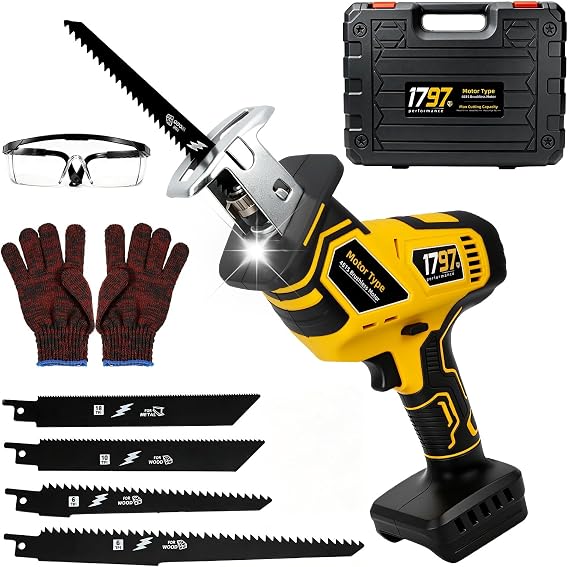
Compatible with DEWALT 20V batteries, this cordless brushless reciprocating saw suits DIYers and pros looking for a powerful, battery-friendly tool. Its brushless motor, running up to 3,800 strokes per minute, stands out for delivering strong cutting speed without the bulk of extra chargers or batteries.
The saw fits comfortably in hand thanks to its ergonomic handle and is light enough to carry around on longer jobs. It doesn’t come with a battery or charger, so you’ll want to have a DEWALT 20V battery on hand to get started.
Changing blades is quick and simple with a keyless system, making day-to-day work straightforward and less frustrating.
Cutting through wood, plastic, or metal feels smooth due to the high-performance brushless motor, which is designed for longer life and less upkeep. The tool’s rectangular blade shape is standard for reciprocating saws, supporting various cutting angles.
Users praise its power and reliability, while some mention the need to supply your own battery as a downside.
Power and speed get highlighted most often, showing the saw can handle tough cuts without much fuss. The most common drawback is the extra cost and hassle of needing a compatible DEWALT 20V battery and charger, as none come in the box.
People who already own DEWALT 20V batteries will appreciate the convenience and performance here. Those new to cordless tools or who don’t want to invest in batteries might find better options including everything needed to start right away.
Pros
- Compatible with multiple DEWALT 20V batteries
- Brushless motor extends tool life
- Ergonomic handle for comfortable grip
- Keyless blade change speeds up work
Cons
- No battery or charger included
- Rectangular blade shape limits specialty cuts
| Specification | Details |
|---|---|
| Power Source | Battery Powered |
| Speed | 3800 rpm |
| Blade Shape | Rectangular |
| Motor Type | Brushless |
| Special Features | Ergonomic Handle, Keyless Blade Change, Lightweight |
10. 21V Cordless Reciprocating Saw with Batteries

FULLYEA 21V Cordless Reciprocating Saw offers versatile power with stepless speed control for smooth cutting. It suits DIY enthusiasts and light contractors looking for a convenient cordless saw that handles multiple materials. Its biggest strength lies in the adjustable speed, which makes cutting different materials easier and faster.
Setup involves charging two included batteries and loading the blade using a simple lever-actuated mechanism. Changing blades requires no tools, which speeds up work when switching between tasks. An ergonomic handle and lightweight design make it comfortable for extended use, while the LED light improves visibility in darker spaces.
Cutting wood, metal, plastic, and branches is effective thanks to the 28mm stroke and variable speed up to 3500 SPM. The build feels durable for its class, with positive remarks about easy handling.
The most common complaint is about battery life, as it relies on two A batteries that may need frequent replacement or recharging.
The adjustable speed control is praised for handling both soft and hard materials easily. Most users note the convenience of tool-free blade changes. Battery life is often mentioned as a downside because it needs frequent attention or replacements with standard A batteries.
Those needing a versatile, portable saw for home or garden projects will find this a handy tool. Professionals requiring longer runtime or heavier cutting should consider models with more powerful battery systems and longer durability on a single charge.
Pros
- Variable speed matches cutting needs
- Quick, tool-free blade change
- Lightweight and ergonomic handle
- Built-in LED light for dark spots
Cons
- Battery life may require frequent recharging
- Uses two A batteries instead of standard rechargeable pack
| Specification | Details |
|---|---|
| Power Source | Battery Powered |
| Speed Control | 0-3500 SPM Stepless Speed |
| Stroke Length | 28mm |
| Blade Change | Tool-free Lever Actuated |
| Batteries Included | 2 A batteries |
11. 7Amp Variable Speed Reciprocating Saw

Feeling sturdy in hand, this reciprocating saw suits anyone tackling home renovations or woodworking projects. Its biggest strength lies in the balance between power and control, delivering a solid cutting experience without overwhelming the user.
Setting it up is straightforward since it’s corded electric and plugs right into a standard 120V outlet. The 360° rotating handle button offers comfort by allowing you to adjust your grip easily.
Multiple speed control from 0 to 2800 RPM makes adapting to wood, metal, or stainless steel straightforward. Changing blades is simple with the included woodworking, metal, and stainless steel options.
The saw cuts efficiently thanks to an 850-watt motor and a 1-1/10 stroke length that handles most material depths comfortably. Its build feels reliable, and spare carbon brushes add longevity. High marks go to its versatility with the rotating handle and variable speed.
A noted downside is the corded design limiting mobility, and some might find the weight bulky during extended use.
Strong points include powerful cutting with the 7A motor and flexible speed settings. The most common complaint highlights the limited mobility due to the corded design, which can be a drawback on larger job sites.
The tool fits well for homeowners or hobbyists needing reliable power and precision without frequent mobility needs. Professionals requiring cordless or lighter saws should consider alternatives that offer more freedom and less fatigue.
Pros
- 850W motor handles various materials well
- 360° rotating handle for better grip comfort
- Includes multiple blade types for versatility
- Variable speed control adapts to different tasks
Cons
- Cord limits range of movement
- Weight can be tiring over long periods
| Specification | Details |
|---|---|
| Power Source | Corded Electric |
| Voltage | 120 volts |
| Wattage | 850 watts |
| Speed | 0-2800 RPM |
| Cutting Angle | 360 degrees |
12. Skil 7.5-Amp Variable Speed Reciprocating Saw 9206-02

Great power and control make this corded reciprocating saw a solid choice for most DIYers and occasional pros looking for reliable cutting performance without fuss. Its strongest point lies in delivering consistent power through a simple, well-built design that’s easy on the hands.
Setup is quick thanks to the tool-less blade change, so switching between different blades doesn’t slow you down. The ergonomic handle helps reduce fatigue during longer jobs. Daily use feels natural, especially with the counter balance cutting down on vibration and the pivoting foot giving extra stability when cutting through tough materials like wood or metal.
Cutting power is plenty with a 7.5 Amp motor and 900 watts of output, handling most tasks smoothly. The heavy-duty metal gear housing adds durability, so the saw feels solid and ready for rough work. Users often praise its vibration control and ease of blade changes, though the cord limits portability, which some find inconvenient compared to cordless models.
The most common compliment is about the saw’s smooth vibration control, which makes cutting more comfortable. A frequent downside is its corded nature, requiring access to power outlets and limiting mobility on job sites without easy electricity. Blade changes are quick and painless due to the tool-less system, saving real time when switching tasks.
Anyone needing reliable, powerful cutting for home projects or workshop use will appreciate this saw. Those who want to work farther from outlets or prefer lighter cordless options might want to consider cordless alternatives. It suits users who prioritize steady power and durability rather than maximum portability.
Pros
- Tool-less blade change speeds up switching
- Counter balance reduces vibration effectively
- Pivoting foot stabilizes during tough cuts
- Ergonomic handle eases long use
Cons
- Cord restricts movement on larger jobs
- Weight may tire some users during extended work
| Specification | Details |
|---|---|
| Power Source | Corded Electric |
| Current Rating | 7.5 A |
| Voltage | 120 volts |
| Wattage | 900 watts |
| Blade Shape | Rectangular |
Best Value Reciprocating Saws Comparison Table
| Product | Power Source | Voltage | Speed (rpm) | Special Features |
|---|---|---|---|---|
| SEESII Cordless Saw | Battery Powered | 21 volts | 3500 | Brushless |
| RYOBI ONE+ PCL515B | Battery Powered | 18 volts | – | Bulk Packaged |
| Fanttik R11 Pro Saw | Battery Powered | – | – | Lightweight |
| DEWALT 20V MAX DCS380B | Battery Powered | 20 volts | 3000 | Brushless |
| EZARC 15-Inch Blades | – | – | – | 3-pack blades |
| BLACK+DECKER BDCR20C | Battery Powered | 20 volts | 4500 | special_feature |
| DEWALT Corded DWE305 | Corded Electric | 120 volts | 9000 | Brushless |
| Generic Cordless Saw | Battery Powered | 21 volts | – | Ergonomic, LED light |
| DEWALT Brushless 20V | Battery Powered | – | 3800 | Brushless, Ergonomic |
| 21V Cordless Saw | Battery Powered | – | – | Ergonomic, LED light |
| 7Amp Variable Speed | Corded Electric | 120 volts | 2800 | 360° Rotating Handle |
| Skil 7.5-Amp 9206-02 | Corded Electric | 120 volts | – | Ergonomic Handle |
- Power SourceBattery Powered
- Voltage21 volts
- Speed (rpm)3500
- Special FeaturesBrushless
- Power SourceBattery Powered
- Voltage18 volts
- Speed (rpm)–
- Special FeaturesBulk Packaged
- Power SourceBattery Powered
- Voltage–
- Speed (rpm)–
- Special FeaturesLightweight
- Power SourceBattery Powered
- Voltage20 volts
- Speed (rpm)3000
- Special FeaturesBrushless
- Power Source–
- Voltage–
- Speed (rpm)–
- Special Features3-pack blades
- Power SourceBattery Powered
- Voltage20 volts
- Speed (rpm)4500
- Special Featuresspecial_feature
- Power SourceCorded Electric
- Voltage120 volts
- Speed (rpm)9000
- Special FeaturesBrushless
- Power SourceBattery Powered
- Voltage21 volts
- Speed (rpm)–
- Special FeaturesErgonomic, LED light
- Power SourceBattery Powered
- Voltage–
- Speed (rpm)3800
- Special FeaturesBrushless, Ergonomic
- Power SourceBattery Powered
- Voltage–
- Speed (rpm)–
- Special FeaturesErgonomic, LED light
- Power SourceCorded Electric
- Voltage120 volts
- Speed (rpm)2800
- Special Features360° Rotating Handle
- Power SourceCorded Electric
- Voltage120 volts
- Speed (rpm)–
- Special FeaturesErgonomic Handle
How to Choose the Right Reciprocating Saw
Look for a reciprocating saw with durable construction, comfortable grip, and adjustable speed to handle different materials effectively. Prioritizing these features ensures efficient cutting, reduces wear and tear, and saves money by avoiding frequent replacements or repairs.
Power and Performance
Reciprocating saws with low wattage or amp ratings often struggle with tougher materials, bogging down or overheating quickly. A motor rated around 7 to 12 amps or 800 to 1200 watts usually delivers reliable cutting power for a range of tasks. Stroke length affects how aggressively the blade cuts; about 1 inch is common and balances speed with control.
Variable speed settings allow adjusting the pace depending on the material, which prevents burn marks on wood or overheating metal.
Handling different blade types and thicknesses is crucial. Look for models that accept standard blades and offer easy blade changes, such as tool-less clamps.
Quality saws can use blades from thin metal to thick wood efficiently, maintaining smooth operation without excessive vibration or motor strain.
Battery Life and Compatibility
Run time on cordless reciprocating saws depends heavily on battery capacity. Batteries rated 4.0 Ah or higher offer longer continuous use, important for several cuts without recharging.
Fast charging options reduce downtime but charging times vary widely between models.
Compatibility with existing battery lines can save expense and hassle, many brands use the same batteries across multiple tools. Having spare batteries ready allows work to continue uninterrupted.
It’s wise to check if the saw comes with at least one battery or if extra packs are needed.
Ergonomics and Handling
Using a reciprocating saw for extended periods reveals the importance of balanced weight and grip comfort. Saws around 6 to 8 pounds that distribute weight evenly reduce fatigue.
Ergonomic handles with rubber inserts improve grip security and comfort during prolonged use.
Vibration reduction features significantly lessen hand strain and improve cut accuracy. Compact size and a slim shape enable better maneuverability, especially in cramped work areas or awkward angles, which makes the saw more practical for tight framing or demolition tasks.
Durability and Build Quality
Housing made of heavy-duty plastic with steel reinforcements tends to resist damage from drops or bumps. Critical components like gears and blade clamps made from metal rather than plastic increase lifespan. Dust and moisture resistance ratings, such as IP20 or better, protect the saw during rough jobs outdoors or in dusty environments.
Blade clamps that securely lock blades without wobble or slipping extend tool life and improve safety. Mechanisms that avoid rust and use durable materials mean fewer repairs and replacement parts over time.
Safety Features
Models with blade guards or small shields reduce the risk of accidental cuts, especially in tight or unpredictable working spots. Smooth start features prevent sudden jerks when pulling the trigger, which helps control the saw more precisely.
Electronic brakes that stop the blade quickly improve safety after release.
Lockoff switches and trigger locks prevent the saw from starting unintentionally during transport or if the trigger is bumped. These contribute to safer handling and lower chances of injury or accidental damage on the job.
Tips for Maximizing Efficiency When Using a Reciprocating Saw
A stable grip on the saw is critical for accurate cuts and reduces the chances of the blade binding. Match the blade to the material you’re cutting; for example, wood-cutting blades differ significantly from metal-cutting ones in tooth design and durability.
Below are practical tips for working efficiently with a reciprocating saw:
- Begin with slower speeds to control the blade and avoid damage, then increase pace as needed.
- Use the shoe (the adjustable metal part at the front) to brace against the material; it helps steady the tool and limits blade wobbling.
- Don’t force the saw; let the blade do the cutting. Applying too much pressure can wear out the motor and damage the blade.
- Plan cuts to avoid hitting nails or screws. When you’re unsure, a stud finder or magnet can help locate hidden fasteners in wood.
These habits help improve cut quality and prolong the life of your blades and tool.
Essential Maintenance Practices to Extend the Life of Your Reciprocating Saw
Regular upkeep prevents wear and keeps a reciprocating saw in good working order. After each use, remove dust and debris from vents and blade clamps to avoid clogging or overheating.
Routine maintenance tasks include:
- Cleaning the blade clamp mechanism with a brush or compressed air to ensure blades insert smoothly.
- Inspecting blades for damage or dullness and replacing them promptly; dull blades strain the motor.
- Lubricating moving parts based on the manufacturer’s recommendations, which can prevent rust and reduce friction.
- Checking the power cord or battery contacts for wear or corrosion to ensure consistent power delivery.
- Storing the saw in a dry environment to avoid moisture damage.
Consistent maintenance can significantly extend the functional life of the saw and maintain cutting performance.
Comparing Reciprocating Saws with Other Cutting Tools for Versatile Applications
Reciprocating saws stand out for their aggressive, plunging cuts in tight or awkward spaces. Compared to circular saws, they cut irregular shapes easier but are less precise for straight, clean cuts.
Jigsaws offer more control for curved cuts and finer details but lack the power and reach for demolition or heavy-duty tasks that reciprocating saws handle well.
Handsaws require more effort and are slower, making reciprocating saws better for jobs involving metal pipes or framing materials.
Reciprocating saws fit a middle ground where versatility, speed, and access to confined areas are priorities. Though not suited for fine woodworking, their design handles demolition, remodeling, and rough cutting on multiple materials efficiently.
People Also Asked
How Do I Choose the Right Size Reciprocating Saw Blade?
Choose a blade length that matches the thickness of your material; longer blades are better for thick wood, while shorter blades provide more control on tight cuts. Make sure the blade type suits the material you intend to cut, like bi-metal for metal or wood-specific blades.
What Safety Precautions Should I Take When Using a Reciprocating Saw?
Always wear safety glasses and gloves to protect from flying debris and accidental cuts. Secure your workpiece firmly and keep both hands on the saw to maintain control, especially to prevent kickback.
How Long Does a Typical Reciprocating Saw Blade Last with Regular Use?
Blade lifespan varies widely with use and material but generally lasts from a few cuts to a few weeks for regular DIY tasks. Wood cuts tend to dull blades slower than metal, so replacing blades when you notice slowed cutting or burning is important.
Can Reciprocating Saw Blades Cut Through Metal and Wood Effectively?
Yes, blades designed for metal and wood, like bi-metal or carbide-tipped, cut both materials effectively; using the right speed and blade type is key. Using the proper blade prevents damage and keeps cuts cleaner.
What Are Common Problems with Reciprocating Saws and How to Fix Them?
Common problems include blade dulling, motor overheating, and blade slipping in the clamp. Regularly inspect the blade for wear, allow the saw to cool during heavy use, and tighten the blade clamp to fix these issues.
Conclusion
Choosing a reciprocating saw comes down to durability, power, and ease of blade changes. A tool that runs smoothly without stalling will save time on tougher cuts. Also, a comfortable grip helps if you spend long stretches cutting.
Those details make the difference between a saw that just works and one you reach for first.
Pick a saw that fits your workshop space and matches how often you plan to use it. A compact model suits tight spots, while a more powerful saw works better for frequent or heavy-duty jobs.
Check back through the comparison table and the picks above to find one that fits your needs without overspending.

I’m Cody Harrison, a lifelong hunter who has spent many seasons in the woods, marshes, and open country. I write about hunting gear, rifle and bow setups, scouting strategies, tree stands, and field safety. I share lessons from real hunts to help both beginners and experienced hunters prepare better, hunt smarter, and get more out of every trip.


